There is something timeless about sailing across an endless ocean with nothing but the sound of the waves, the wind filling your sails, and a distant island waiting on the horizon. That feeling is exactly what Windward Horizon tries to capture, and for the most part, it succeeds. As the long-awaited sequel to the original Windward from 2015, Tasharen Entertainment expands almost every system while keeping the relaxing sandbox identity that made the first game memorable.
After spending many hours exploring its procedural world, experimenting with different playstyles, and gradually upgrading my fleet, I came away impressed by just how much depth hides beneath its peaceful atmosphere. At the same time, I also discovered several frustrating design decisions that become impossible to ignore during the later stages of the game. Windward Horizon is a title that can be incredibly rewarding, but it is also one that clearly feels designed around cooperative play rather than a solo experience.
A Massive Ocean That Always Feels Different
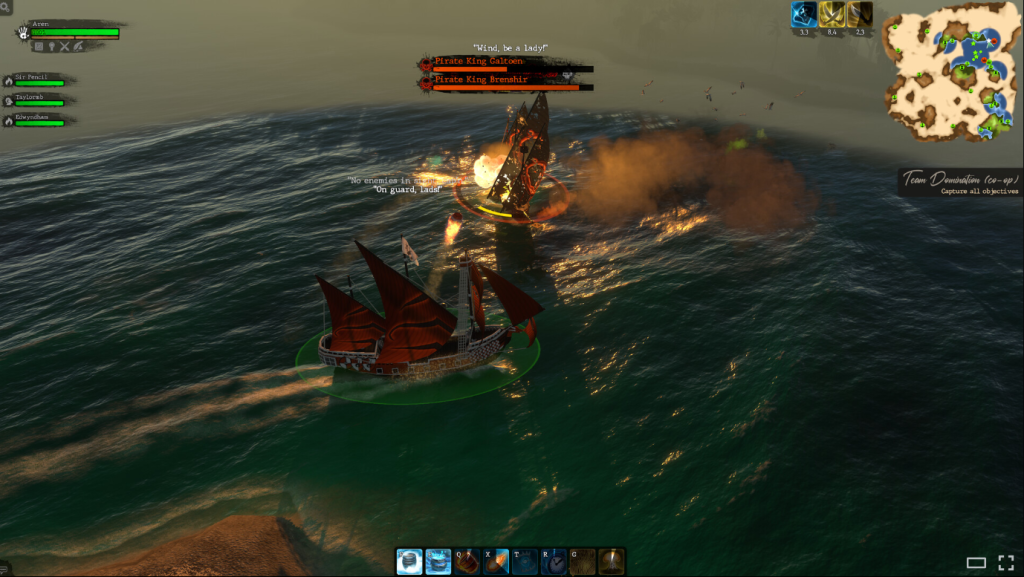
Every new campaign begins with a procedurally generated world, meaning no two adventures unfold exactly the same way. Instead of memorizing maps or optimal routes, every journey starts with genuine exploration. Hidden treasures, trade routes, pirate hideouts, and competing factions create an unpredictable world that constantly encourages curiosity.
I genuinely enjoyed this design philosophy because exploration never felt repetitive. Even after dozens of hours, I was still discovering islands, resources, and unexpected events that completely changed my priorities. Rather than following a strict storyline, Windward Horizon allows players to create their own adventures naturally.
The ocean itself is surprisingly alive. Merchant ships travel between settlements, pirates raid trade routes, factions compete for influence, and towns continue developing over time. Watching the world evolve around my actions made everything feel more dynamic than many traditional sandbox RPGs.
The atmosphere deserves special praise as well. Calm music, detailed water effects, changing weather conditions, and the relaxing pace create an experience that often feels more therapeutic than stressful. It became one of those games where I could simply sail for thirty minutes without feeling the need to accomplish a specific objective.
Choose Your Own Career At Sea
One of Windward Horizon’s biggest strengths is the freedom it offers. Unlike many RPGs that constantly push players toward combat, this game allows multiple viable progression paths.
You can become a successful merchant, transporting valuable cargo between settlements while building a profitable trading network. Alternatively, you can focus almost entirely on naval combat, hunting pirates and defending allied territories. Exploration is equally rewarding, allowing players to discover hidden locations, rare resources, and unique opportunities scattered across the world.
I appreciated that none of these approaches felt like the “wrong” way to play. Whether I spent an evening delivering supplies or hunting hostile fleets, I always felt like I was making meaningful progress toward improving my captain and expanding my influence.
Even achievement hunters will appreciate this flexibility since nearly every public achievement can be earned regardless of which specialization you choose. That level of player freedom is something many modern RPGs struggle to achieve.
Naval Combat That Is Easy To Learn But Difficult To Master
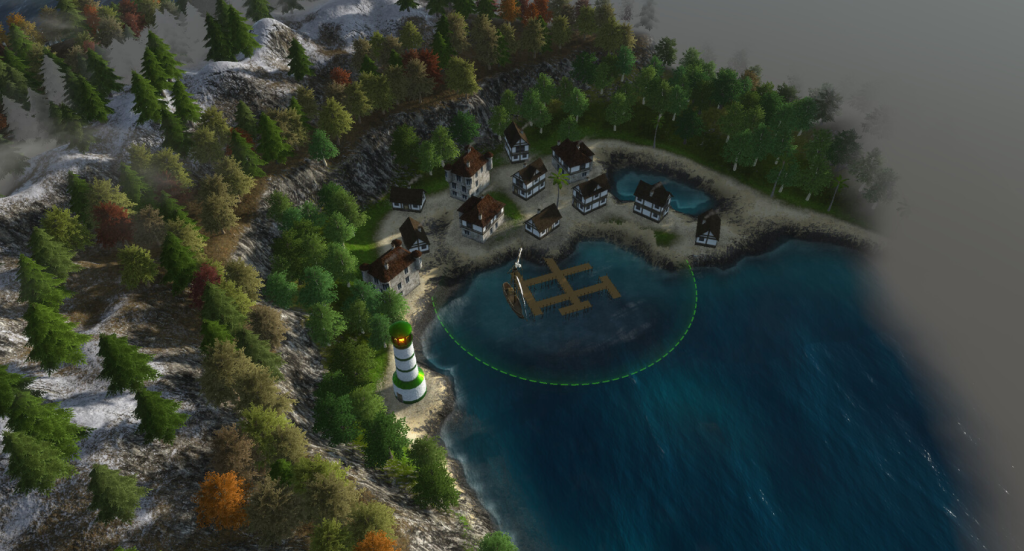
Combat quickly became one of my favorite aspects of the game. Battles strike an excellent balance between accessibility and strategy.
Positioning matters. Ship speed matters. Weapon selection matters. Crew abilities matter. Every encounter requires more thought than simply firing cannons as quickly as possible.
The talent trees reminded me of the strongest aspects of early MMORPG design. They encourage experimentation instead of forcing one optimal build. I frequently adjusted my abilities depending on whether I wanted to specialize in trading, exploration, fleet support, or direct combat.
Initially, I was skeptical about some of the game’s smaller interactive systems and mini games. They seemed like distractions rather than meaningful mechanics. Surprisingly, they turned out to be incredibly addictive and helped break up the slower pacing between voyages.
The longer I played, the more I appreciated how interconnected every progression system became. Ship upgrades, talents, equipment, crew management, and economic decisions all contribute toward creating a satisfying sense of long-term progression.
Deep Ship Customization Keeps Progression Rewarding
Customization is another area where Windward Horizon performs exceptionally well.
Players begin with a relatively modest schooner but gradually unlock increasingly specialized ships capable of serving entirely different purposes. Some vessels excel in heavy combat, while others maximize cargo capacity or provide excellent support during multiplayer expeditions.
Equipment customization goes far beyond simply increasing numerical statistics. Different weapons, defensive systems, passive bonuses, and crew abilities allow each ship to feel distinct. I often found myself redesigning my vessel before longer expeditions depending on what I planned to accomplish.
The progression never felt rushed. Every upgrade felt earned, making each new ship feel like a genuine milestone rather than another routine equipment replacement.
Difficulty customization also deserves recognition. Players can modify several world parameters before beginning a campaign. Pirate activity, overall challenge, and other gameplay variables can all be adjusted, allowing players to tailor the experience to their preferences.
Building Provinces And Influencing The World
Beyond exploration and combat lies a surprisingly ambitious strategic layer.
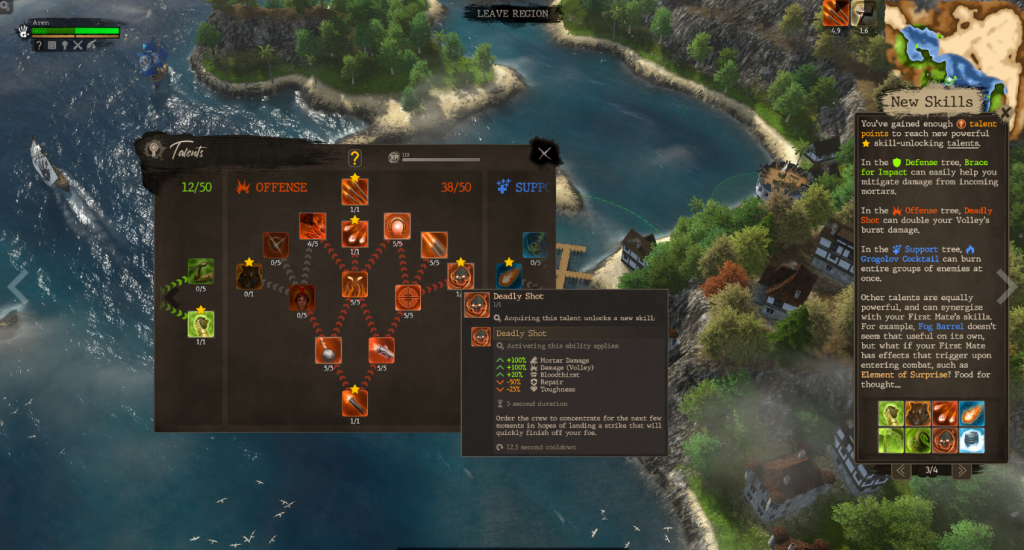
Players can establish provinces, construct settlements, expand infrastructure, endorse governors, and slowly influence regional politics. Every completed quest, successful trade route, or pirate fleet destroyed contributes toward shifting territorial influence between competing factions.
On paper, this system sounds fantastic because it allows players to reshape the world through their actions instead of merely existing within it.
Watching regions gradually change ownership because of my contributions initially felt incredibly satisfying. It creates the illusion that every voyage has meaningful consequences beyond personal progression.
Unfortunately, this is also where many of the game’s biggest problems begin to appear.
Where The Empire Management Starts Falling Apart
The deeper I progressed into province management, the more obvious the balancing issues became.
Food shortages become almost constant. Certain resources disappear faster than provinces can produce them. Local economies rarely become self-sustaining, forcing players to personally transport supplies over and over again simply to prevent settlements from stagnating.
Instead of feeling like a growing empire, my provinces often felt like permanent emergencies demanding constant manual intervention.
One particularly frustrating issue is that provincial growth never reverses naturally. Once settlements expand, their growing demands continue increasing while production struggles to keep pace. Rather than becoming more efficient, larger provinces often become increasingly difficult to support.
Eventually I realized that my success in combat or exploration barely mattered because almost all my attention shifted toward maintaining fragile logistics. That completely changed the pacing of the game in a way that wasn’t especially enjoyable.
The strategic layer has tremendous potential, but in its current form it often undermines the excellent naval gameplay surrounding it.
Solo Players Will Eventually Hit A Wall
This became my biggest personal disappointment.
During the early game, playing alone feels perfectly enjoyable. Exploration is exciting, progression is steady, and discovering new systems remains genuinely fun.
However, once the endgame begins, solo players are left handling increasingly demanding management responsibilities without enough meaningful assistance from AI systems.
The repetitive logistics eventually become exhausting. Instead of feeling like a legendary captain commanding an empire, I often felt like a delivery driver transporting food and supplies between struggling settlements.
The limited difficulty balancing does not help either. Although players can customize several world settings, overall progression balance remains fairly rigid. The developers have publicly indicated that they are not planning major balance adjustments, meaning players should approach the game understanding that the current design philosophy is likely to remain largely unchanged.
If you primarily enjoy single-player sandbox experiences, this limitation is worth considering before purchasing.
Co-op Completely Changes The Experience
Playing with friends transforms Windward Horizon into a much stronger game.
The repetitive logistics become shared responsibilities. Combat encounters become far more dynamic. Trading networks become easier to maintain. Exploration feels more rewarding when discoveries are shared.
Instead of one player trying to accomplish everything, each captain can naturally specialize in different activities.
One friend might become the primary merchant while another focuses on piracy or military defense. Others can concentrate on exploration or settlement development. That division of responsibilities creates the cooperative fantasy the game clearly aims to deliver.
During multiplayer sessions, many of the frustrations I experienced while playing solo became significantly less noticeable.
Because of that, I would comfortably recommend Windward Horizon to groups of friends looking for a long-term cooperative sandbox adventure.
Relaxing Design Removes Pressure But Also Removes Stakes
One interesting design decision is the complete absence of meaningful punishment for failure.
Losing battles carries very little long-term consequence. There is no hardcore mode, no severe penalties, and almost no pressure to immediately respond to world crises.
For casual players, this creates an incredibly relaxing experience. I never felt anxious about experimenting with different builds or taking risks because failure rarely carried lasting consequences.
On the other hand, players looking for high tension survival gameplay may find this design somewhat lacking. Without meaningful risk, certain victories lose some of their excitement.
Personally, I enjoyed the more laid-back pacing during the early hours, although I occasionally wished the game offered optional modes with higher stakes for experienced players.
Technical Performance And Overall Polish
From a technical standpoint, Windward Horizon performs well.
Loading times remain relatively short, performance stays stable even during larger naval encounters, and the user interface communicates complex systems surprisingly well after the initial learning period.
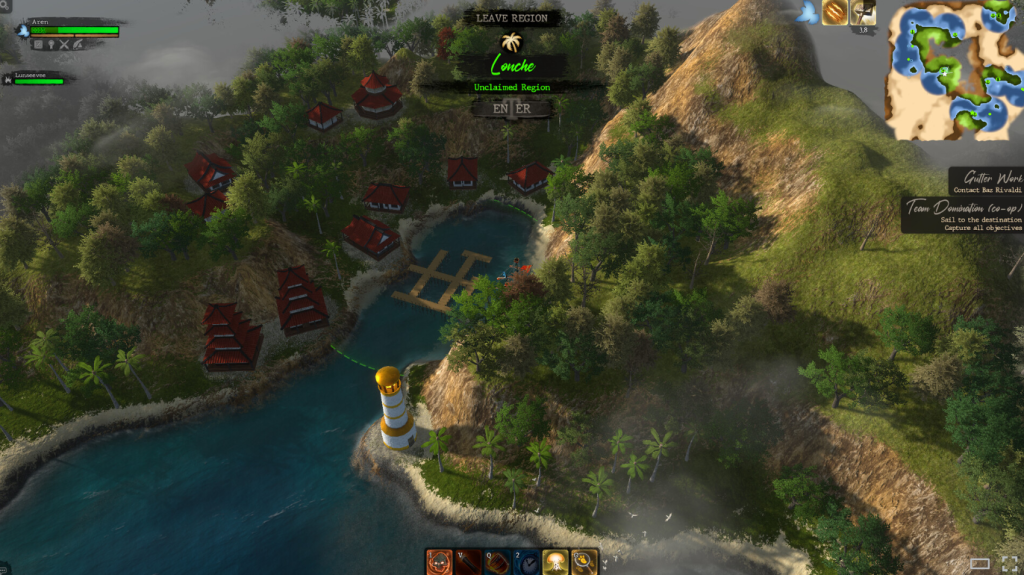
The visual style favors colorful stylized graphics over photorealism, which works nicely for a game built around exploration. Water simulation, lighting, weather effects, and ship animations all contribute to an attractive presentation without demanding cutting-edge hardware.
Audio also deserves praise. The soundtrack complements the peaceful atmosphere beautifully while environmental effects help immerse players during long voyages across open waters.
Although there are occasional balancing frustrations, I rarely encountered technical issues that interrupted gameplay.
Final Verdict
Windward Horizon is a fascinating naval RPG because it excels in so many areas while simultaneously struggling with one of its most ambitious systems. I absolutely loved exploring its procedurally generated world, experimenting with different ship builds, mastering naval combat, and discovering new ways to approach every campaign. The freedom to become a trader, pirate, explorer, or warrior gives the game impressive replay value, and the progression systems are deeper than they initially appear.
At the same time, I cannot ignore the frustrating province management, repetitive endgame logistics, and limited appeal for dedicated solo players. Those issues gradually become more noticeable the longer you play, especially if you hoped to build a thriving empire without constantly micromanaging supply shortages.
For me, Windward Horizon is at its best when shared with friends. Cooperative play enhances nearly every mechanic while minimizing many of the frustrations that emerge during solo progression. If you have a group looking for a relaxing yet surprisingly deep naval sandbox with meaningful customization and rewarding exploration, this is an easy recommendation. If your plan is to experience everything entirely alone, it is still enjoyable, but you should be prepared for an endgame that becomes far less engaging than the incredible adventure that comes before it.