Microlandia Reinvents the City Builder Genre with a Brutally Honest Simulation of Modern Urban Life

The city-building genre has long invited players to create thriving metropolises filled with efficient transportation systems, expanding skylines, and prosperous citizens. However, most traditional city simulators simplify or entirely ignore the difficult realities that define modern urban management. Microlandia, developed by Berlin-based indie studio Information Superhighway Games, aims to change that formula with a socioeconomic simulation that places real-world challenges at the center of every decision.

Rather than focusing solely on expanding districts and balancing construction costs, Microlandia asks players to govern a living city where housing shortages, healthcare capacity, unemployment, public transportation, taxation, political approval, and financial sustainability all interact dynamically. Every policy decision has measurable consequences, creating one of the most technically detailed and politically driven city simulations currently available.

A New Philosophy for City-Building Games

Microlandia introduces a philosophy rarely explored in management simulations: cities are not simply collections of buildings, but highly interconnected socioeconomic systems where every decision influences thousands of virtual lives.

The inspiration came from director Cristián González, who questioned why classic city builders often ignored issues such as homelessness, poverty, graffiti, and social inequality despite these being fundamental characteristics of real cities. Instead of presenting an idealized metropolis, Microlandia embraces both the strengths and weaknesses of urban environments through a simulation based on extensive economic and demographic modeling.

Unlike traditional sandbox experiences where players can simply continue expanding indefinitely, Microlandia creates meaningful pressure by requiring continuous adaptation to changing political, financial, and social conditions.

A Socioeconomic Simulation Powered by Real-World Data

One of the game’s most distinctive technical achievements is its simulation model, which incorporates datasets inspired by organizations including the World Bank, the OECD, and the U.S. Bureau of Labor Statistics.

These datasets help determine how employment, healthcare, housing, taxation, migration, and economic growth evolve throughout gameplay. Rather than relying on arbitrary balancing values, many systems mirror actual relationships found in modern economies.

Economic growth influences migration, migration increases housing demand, housing shortages increase rental prices, rising rents increase homelessness, homelessness reduces political approval, declining approval threatens election outcomes, while budget constraints limit the government’s ability to respond effectively.

The result is an interconnected simulation where every variable affects multiple others simultaneously, creating complex emergent scenarios instead of scripted gameplay events.

Democracy as the Core Gameplay Mechanic

Perhaps the most innovative feature in Microlandia is its political system.

Unlike most city builders where success is measured only through population size or economic output, Microlandia introduces democratic elections every five in-game years. Winning elections becomes the primary victory condition, fundamentally changing player priorities.

Citizen approval is divided into six major policy categories:

  • Shelter
  • Occupation
  • Safety
  • Basic Needs
  • Parks
  • Healthcare

Each category is monitored individually through a live polling system that constantly reflects public opinion. Players can no longer ignore unpopular policies simply because the city’s economy remains profitable.

If approval ratings fall too low, players lose the election—and their administration comes to an immediate end regardless of city size or financial success.

Managing a Real Government Budget

Financial management extends far beyond balancing income and expenses.

Road construction requires substantial investment, public services generate continuous operational costs, pension systems consume large portions of municipal spending, and emergency services require permanent staffing.

The game’s ledger updates in real time whenever spending levels change. Increasing healthcare funding improves medical capacity but reduces available capital for infrastructure. Cutting budgets may stabilize finances temporarily but often damages public approval while reducing service quality.

Bankruptcy occurs once municipal debt reaches approximately negative $100 million, introducing meaningful financial risk throughout an entire campaign.

Rather than offering unlimited growth, Microlandia forces administrators to constantly weigh short-term savings against long-term prosperity.

Housing Markets That Behave Like Real Economies

Housing represents one of the simulation’s most sophisticated systems.

Residential demand rises naturally as population increases, but insufficient construction creates shortages that immediately increase rental prices.

Landlords react to changing market conditions, property values fluctuate, and homelessness becomes a visible challenge rather than an abstract statistic.

Players must continuously balance residential expansion with commercial development, transportation investment, and municipal finances to prevent affordability crises from spiraling into political disasters.

This creates an economic feedback loop remarkably similar to many modern metropolitan housing markets.

Healthcare Capacity Matters

Healthcare is modeled with surprising technical precision.

Hospital beds function as actual capacity limits rather than simple service coverage radii. Every staffed hospital bed costs approximately $20,000 per month in operational and staffing expenses.

When hospitals exceed 100% occupancy, patients enter waiting lists where mortality risks increase significantly. Population decline, reduced tax income, migration changes, and negative political sentiment all emerge naturally from insufficient healthcare capacity.

Ambulance response times further influence medical outcomes, encouraging players to strategically position hospitals near major employment centers and densely populated neighborhoods.

Healthcare therefore becomes one of the most expensive—but also one of the most politically important—municipal investments.

Transportation Beyond Simple Traffic

Transportation systems go well beyond moving vehicles through intersections.

Every worker must successfully complete a journey to work. The simulation checks whether adequate parking spaces or public transit seats are available.

If neither exists, employees fail to reach work and may lose their jobs, creating higher unemployment while simultaneously reducing business productivity.

Street parking begins with default pricing of approximately $12 per day, forcing players to carefully balance affordability with municipal income.

Bus networks generate operating revenue through ticket sales, but excessive fare increases reduce ridership and ultimately undermine the public transportation system.

This detailed mobility simulation creates one of the most realistic transportation models currently implemented in the genre.

Dynamic Economic Systems

Businesses play an essential role in maintaining prosperity.

Corporate investment increases employment opportunities and expands the city’s tax base, but companies also respond to unfavorable economic conditions.

Poor fiscal management can lead to insolvencies, triggering unemployment waves that reduce tax revenue, increase welfare spending, and negatively affect voter approval.

Economic downturns are therefore not isolated events but interconnected crises affecting nearly every municipal system simultaneously.

This complexity rewards long-term strategic planning over short-term optimization.

Unexpected Events Challenge Every Administration

Urban management rarely follows predictable patterns.

Microlandia regularly introduces unexpected events that force players to rapidly adapt their strategies.

Economic recessions, ransomware attacks, heatwaves, healthcare emergencies, infrastructure failures, and other crises can suddenly reshape municipal priorities.

Each event generates cascading consequences throughout the simulation while simultaneously becoming headline news in the game’s dynamic newspaper system.

Players must therefore maintain financial reserves, resilient infrastructure, and sufficient public trust to survive unforeseen disasters.

A Living Newspaper Holds Leaders Accountable

One of Microlandia’s most original features is its integrated local newspaper.

Rather than serving as decorative storytelling, the newspaper actively reports every major political decision, infrastructure project, healthcare crisis, housing shortage, employment issue, or financial mistake.

Its headlines influence player perception while also helping diagnose emerging problems before they become catastrophic.

Combined with statistical trend analysis, approval polling, and economic reports, the newspaper functions as an important management tool instead of simple narrative flavor.

Progression Through Demand Points

Expansion follows a unique progression model.

Instead of endlessly placing buildings, players earn Demand Points whenever residential or commercial occupancy exceeds roughly 20 percent capacity.

These points unlock additional zoning opportunities and major development projects such as corporate towers and specialized infrastructure.

Certain developments also require sufficient political capital before becoming available, further reinforcing the relationship between urban planning and democratic governance.

The progression system encourages thoughtful expansion rather than uncontrolled city sprawl.

Technical Platform Support and Accessibility

Microlandia is available for Windows, macOS, and Linux through Steam, with an additional release on itch.io.

The game supports a broad international audience through localization into English, German, Spanish, French, Italian, Polish, Portuguese, Turkish, Japanese, Korean, and Simplified Chinese.

Despite its highly sophisticated simulation systems, the game is offered at an accessible retail price of $9.99, making it considerably more affordable than many competing management simulators.

The title continues to receive international attention through major industry events including Gamescom 2026, where it joins the Indie Arena Booth Official Selection and the “Democracy at Play” showcase, as well as Tokyo Game Show 2026.

Independent Development with Big Ambitions

Microlandia represents the vision of Information Superhighway Games, an independent Berlin-based studio founded by Cristián González and Catalina Pimentel.

Rather than relying on large commercial game engines, the development team embraces open-source technologies to build highly customized simulation systems.

This technical independence allows the developers to prioritize systemic depth over graphical spectacle, resulting in gameplay driven by interconnected mechanics rather than scripted scenarios.

Industry publications have already highlighted the game’s unusually ambitious design philosophy, describing it as one of the most uncompromising and intellectually engaging city builders in recent years.

Conclusion

Microlandia pushes the city-building genre into new territory by combining realistic economic modeling, democratic governance, detailed healthcare and transportation systems, dynamic housing markets, political accountability, and data-driven socioeconomic simulation. Instead of rewarding unlimited expansion, it challenges players to balance public services, financial sustainability, citizen well-being, and electoral success within a deeply interconnected urban ecosystem. With its emphasis on realism, systemic complexity, and meaningful consequences, Microlandia offers a fresh perspective on city management that transforms every policy decision into a strategic test of leadership, making it one of the most technically ambitious independent simulation games to emerge in recent years.

LANESPLIT: The Ultimate Flow-State Generator

My 1-Hour Stream Experience

I just wrapped up a solid one-hour livestream playing LANESPLIT, and I am absolutely blown away by how addictive this game is. If you’ve ever wanted to capture the pure, unfiltered adrenaline rush of weaving through tight highway traffic at 300 km/h without any real-world consequences, this is it. It is an absolute masterpiece of atmosphere, speed, and zen-like focus.

Continue reading “LANESPLIT: The Ultimate Flow-State Generator”

Kioku Last Summer Review: A Beautifully Nostalgic Childhood Adventure

On May 28, 2026, Assemble Entertainment and Norwegian indie developer Lugn Games launched their debut cozy adventure title on the Steam PC platform. Priced at a modest 14.99€, this project introduces players to an atmospheric, open-ended journey viewed through the lens of a young child. The game positions itself as a narrative-driven simulation of a mid-1990s Scandinavian summer, blending childhood wonder with distinct, collectible-driven progression systems that reward dedicated exploration.

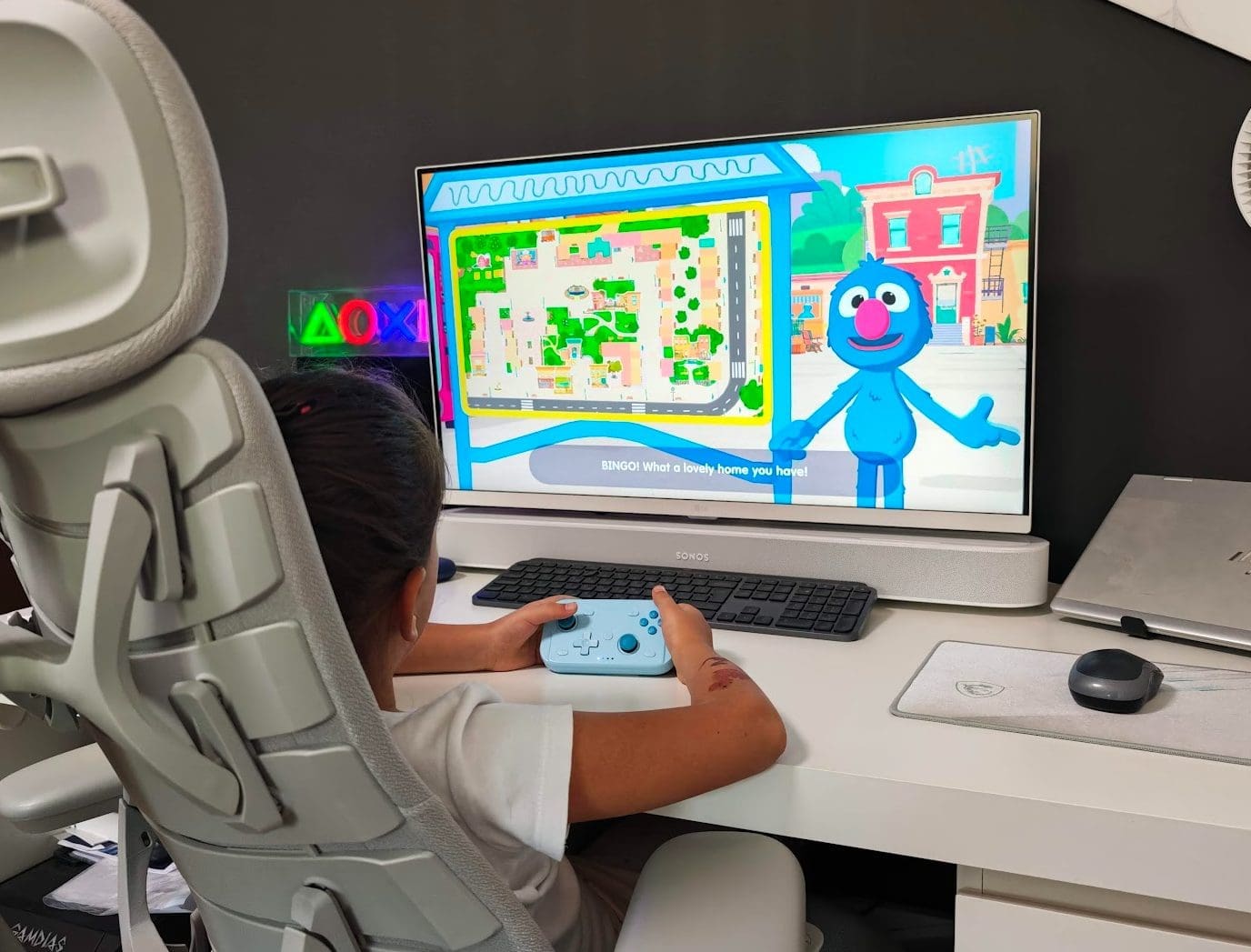
From an accessibility standpoint, the title features highly intuitive core navigation systems that make it playable across a remarkably broad age spectrum. Testing the game with very young children demonstrates its strong developmental design, as a five-year-old player is fully capable of independently operating the controls, understanding the spatial layout of the island, and exploring the environment without adult intervention. Even younger children, such as three-year-olds, find visual engagement in the bright aesthetic and character movements, making it a highly effective shared family experience that brings people together.

World Design and Exploration Architecture

The geographical layout of the island relies on open-ended exploration rather than rigid waypoint systems. Players control a young protagonist named Asti, who arrives on the island with her father and must integrate into the local community by interacting with various non-player characters. The design philosophy intentionally omits traditional guidance markers, often referred to in modern game design as yellow tape, to encourage organic discovery and reward player curiosity.

This lack of overt visual direction highlights the freedom of the environment, allowing players to wander peacefully at their own pace. Because the game embraces a pure exploration loop, wandering becomes a core feature that successfully mirrors the aimless freedom of a real childhood summer. It offers a calm, unhurried experience for users looking to fully immerse themselves in an artistic and relaxing setting.

Continue reading “Kioku Last Summer Review: A Beautifully Nostalgic Childhood Adventure”

Zenbook Cafe & Creative Hub: Where Art, Technology, and Gaming Converge in the Heart of Tel Aviv

In the heart of Tel Aviv, inside the unique space of the historic Matmon Library at Romano House, ASUS recently launched the Zenbook Cafe & Creative Hub, a four-day pop-up experience designed to bring together technology, creativity, design, and innovative thinking.

More than just a product showcase, the event transformed the library into a collaborative workspace and creative center, featuring expert talks, industry discussions, artistic exhibitions, and hands-on experiences with ASUS’s latest devices. The opening event, held last Wednesday, attracted creators, technology professionals, students, designers, and gaming enthusiasts eager to explore the growing relationship between advanced technology and modern digital creativity.

Continue reading “Zenbook Cafe & Creative Hub: Where Art, Technology, and Gaming Converge in the Heart of Tel Aviv”

Over the Hill Surges Past 150,000 Demo Players as Funselektor’s New Off-Road Adventure Captures Steam Audiences

The anticipation surrounding over the hill, the upcoming off-road exploration title from the creators of art of rally, has translated into an impressive early success. During its debut weekend on Steam, the game’s newly released demo attracted more than 150,000 players, giving enthusiasts their first opportunity to experience Funselektor’s latest vehicle-focused adventure. The strong response highlights growing interest in a genre that blends realistic off-road driving, open-world exploration, cooperative gameplay, and environmental storytelling.

Developed by Funselektor in collaboration with Strelka Games, over the hill shifts the studio’s focus from competitive rally driving to a slower-paced exploration experience centered around traversing challenging natural environments. While the studio became known for its minimalist visual style and highly regarded driving mechanics in art of rally, this new project expands upon those foundations by emphasizing discovery, teamwork, vehicle preparation, and interaction with wildlife-rich environments.

Continue reading “Over the Hill Surges Past 150,000 Demo Players as Funselektor’s New Off-Road Adventure Captures Steam Audiences”

Xsolla Club: Building A Home For The Gaming Industry

Last Monday, I attended an event by Xsolla in Tel Aviv.

At first, it felt like another gaming industry gathering.

But this wasn’t another standard networking event.

It was the announcement of something much bigger.

A new hub built specifically for people in the gaming industry. A place designed for thinking, collaborating, meeting people from across the industry, and creating new ideas together.

And according to the vision presented during the event:

This is only the beginning…

The Tel Aviv location is the first gaming hub of its kind created by Xsolla, with plans to open more spaces like this around the world in the future.

The space itself includes gaming rooms where developers can test games, meeting rooms for small teams, quiet working areas, shared workspaces, and even a dedicated podcast room.

During the event, I had the opportunity to sit down with Nikita Sherman,

I had the opportunity to sit down with Nikita Sherman, SVP Business Development Mediterranean at Xsolla, who leads the company’s partnerships, ecosystem growth, and industry initiatives across the region.

Continue reading “Xsolla Club: Building A Home For The Gaming Industry”

Grounded in the Clouds: Why “Legendary Pilots” is the Cozy Aviation Sim We Needed

The flight simulation market has long been dominated by two extremes: arcade-focused titles with little substance, and ultra-realistic behemoths like Microsoft Flight Simulator or X-Plane that require a physical flight rig, a massive installation footprint, and a literal pilot’s license worth of training just to turn the engines on.

Enter Legendary Pilots, a refreshing indie title that brilliantly carves out its own distinct airspace. By pairing gorgeous retro aesthetics with accessible, low-stress gameplay, it serves as the perfect, cozy introduction to commercial aviation for enthusiasts and casual players alike.

Below is an in-depth review of what makes this charming title a standout addition to your digital hangar.

Retro-Modern Aesthetics and Atmospheric Vibes

The very first thing that captures your attention is the game’s striking presentation. It leans heavily into a nostalgic, vibrant pixel-art style reminiscent of the classic Pilotwings era or 1980s Commodore 64 gems like Solo Flight, yet it feels undeniably modern and smooth in motion.

The visual design is incredibly pleasing, featuring beautiful external cruise cameras, vibrant color palettes, and impressive weather effects that add a layer of organic beauty to your flights. The head-shake effect inside the cockpit feels brilliantly tactile, while the incredibly cozy, cheerful soundtrack elevates the entire experience. It is the definitive “early morning coffee” game—perfect for unwinding after a long day or playing casually on a handheld device like the Steam Deck.

Accessible Gameplay: Making Aviation Approachable

Legendary Pilots excels at bridging the gap between casual gaming and traditional flight simulation. It strips away the intimidating 40-minute pre-flight checklists and endless online manuals, allowing you to hop straight into the cockpit and experience the most rewarding segments of flight: takeoffs, manual steering, and landings.

The underlying mechanics strike a masterful, forgiving balance between casual ease of use and light complexity. The flight controls feel highly playable and responsive whether you are using a standard keyboard, an Xbox controller, or even mapping a flight yoke.

The navigation layout introduces players to authentic aviation elements, featuring a simplified, intuitive Radio-Compass system using ADF (Automatic Direction Finder) frequencies and runway headings. Programming your basic autopilot and watching your twin-prop airliner intercept the destination runway heading—especially during low-visibility cloud cover or tricky crosswinds—provides an immense sense of accomplishment without the real-world stress.

Progressive Career Mode & Light Management Tycoon

At its core, the game features an engaging progression loop built around a pilot’s career and a light “Euro Truck Simulator” style business model. You start your journey operating a modest Convair regional twin-prop, flying short regional legs to earn cash and experience points (XP).

As you progress and gain promotions, you can unlock a highly unique, charismatic roster of aircraft—ranging from vintage Russian planes like the Antonov An-26 to iconic regional jets, culminating in the classic Boeing 737-200.

The economy system gives you a genuine reason to keep flying:

  • Fleet Management: Purchase new aircraft, expand your reach, and monitor fleet wear by managing routine maintenance.
  • Crew Management: Hire and interact with flight attendants and co-pilots. Better crew skills directly impact passenger contentment and boost your cash-per-flight revenue.
  • Mission Variety: Take on distinct gameplay types, including standard passenger routes, essential cargo deliveries using manual compass heading intercepts, and thrilling aerial firefighting operations where you navigate via radar to accurately drop water on active targets.

For players who prefer to focus purely on the art of flying, the game offers a thoughtful “move to last leg” fast-travel prompt after reaching cruising altitude, allowing you to skip straight to the final approach and manual landing without losing your momentum.

The Verdict: A Cozy Gem with Massive Potential

Priced incredibly fairly at around $8 to $10, Legendary Pilots delivers tremendous value. Developed by a passionate, small indie team, it is a game built out of a pure love for aviation. It manages to make commercial piloting feel therapeutic, rewarding, and highly addictive.

While its streamlined mechanics won’t replace a hardcore flight simulator, it isn’t trying to. It provides a unique, relaxing, and stylized journey through the skies that is well worth your time.

Our Rating: 8 / 10

First Hour Gameplay Stream

To see the game in action, check out our full video broadcast below, documenting the first hour of flight time, basic navigation training, and grinding out early routes until unlocking our very first professional pilot rank.

LEGO Batman: Legacy of the Dark Knight Review – The Ultimate Multi-Generational Masterpiece

An Exceptional Action-Adventure Journey That Perfectly Bridges the Gap Between Adult Batman Fans and Younger Players

The world of interactive gaming has seen countless versions of the Caped Crusader, but very few titles manage to strike the delicate balance between complex cinematic lore and accessible family entertainment. Developed by TT Games and published by Warner Bros. Games, LEGO Batman: Legacy of the Dark Knight represents a monumental shift for the franchise. Released on May 22, 2026, this game acts as both a mechanical evolution and a deep narrative archive. It manages to deliver a comprehensive, narrative-driven campaign spanning decades of comic books, television shows, and cinematic universes while implementing highly sophisticated design structures that cater perfectly to both adult enthusiasts and younger audiences.

What sets this specific title apart from its predecessors is its brilliant approach to structural narrative distribution. When operating a shared local cooperative couch co-op session with younger family members, the game reveals its true structural genius. It masterfully addresses potentially distressing elements of Batman lore, such as Bruce Wayne’s childhood fall into the subterranean bat-infested cavern or the tragic, seminal loss of Thomas and Martha Wayne. For an adult player, the gravity of these canonical moments is fully realized through clever environmental framing and precise narrative subtext. Conversely, for a young child, these sequences are smoothly absorbed into the fast-paced, whimsical momentum of the broader LEGO framework. The heavy thematic elements are completely neutralized by the ongoing action, keeping the experience entirely appropriate for a PEGI 7 rated audience while remaining deeply engaging for mature minds. It is a stroke of pure genius that allows parents to enjoy the dark roots of Gotham without worrying about scaring the little ones.

Breathtaking Visuals and Flawless Next-Gen Performance

From a purely visual and technical standpoint, the game stands as a benchmark for modern real-time rendering. Moving away from the proprietary engines used in previous studio projects, TT Games rebuilt their pipeline from scratch utilizing Unreal Engine 5. This transition unlocks unparalleled graphical fidelity, characterized by the flawless integration of real-world physical assets with traditional digital LEGO construction blocks. The material shaders are meticulously authored, capturing microscopic plastic imperfections, realistic surface scratches, dust accumulation, and the authentic fabric weave textures of character capes. This hyper-detailed geometry is juxtaposed against realistic environmental textures, such as high-resolution road tarmac, weathered concrete, and volumetric puddles that accurately mirror the neon-drenched skies of Gotham City.

Testing the PC version of the title on an upper-tier hardware configuration featuring an NVIDIA GeForce RTX 4080 graphics processing unit yields spectacular performance metrics. Running at a native 4K resolution with all graphical presets dialed to their maximum ultra values, the game sustains a fluid frame rate well above 60 frames per second. The implementation of hardware-accelerated real-time ray tracing enables highly accurate global illumination, screen-space reflections, and physically correct ambient occlusion. The destructive physics engine is equally demanding; a vast majority of the environment is fully breakable, fracturing into thousands of distinct, physically simulated LEGO pieces. Despite the massive compute load required to calculate individual brick trajectories and real-time lighting updates during high-action sequences, the optimization ensures that gameplay remains completely smooth and free of disruptive frame-time stuttering.

Acoustic Engineering and Immersion Without Headphones

The auditory framework of the title is engineered to maximize spatial immersion, successfully capturing the definitive, brooding essence of the Batman universe. The sound design functions as an essential narrative pillar, leveraging advanced acoustic modeling to firmly plant the player within the dark, expansive districts of Gotham. From the mechanical whirring of advanced gadgetry to the deep, resonant exhaust notes of the various Batmobiles, every asset is mixed with incredible acoustic precision. The environmental audio scales dynamically depending on the current location, shifting from the damp, echo-prone caverns of the Batcave to the open, wind-swept verticality of Wayne Tower.

Even when experiencing the game through standard stereophonic television speakers rather than high-end studio headphones, the acoustic depth remains exceptionally striking. The voice cast delivers stellar performances, featuring Shai Matheson as a progressively gravelly, dedicated Batman, alongside Colin McFarlane as Jim Gordon, Rich Keeble as Two-Face, and Matt Berry as Bane. The orchestral score dynamically shifts its arrangement based on the onscreen action, utilizing leitmotifs inspired by classic cinematic iterations to heighten the dramatic tension. This sophisticated audio layering ensures that the player is completely enveloped by the atmosphere of the world, making the interactive experience feel grand, cinematic, and profoundly authentic at every turn.

Accessible Controls and Tailored Cooperative Ergonomics

Mechanically, the title opts for an elegant, highly approachable control scheme that proves incredibly advantageous for cooperative play sessions with very young children. The entire campaign can be experienced solo or via a seamless drop-in, drop-out local split-screen multiplayer mode. While the core gameplay loop features an advanced, fluid attack-chain and counter system inspired by the Batman: Arkham series, the button mapping is designed with extreme cognitive accessibility in mind. For children under the age of five, utilizing a specialized, smaller ergonomic controller helps bridge the physical gap for essential inputs, allowing them to comfortably access critical bumper inputs like L1 and R1 without straining their small hands.

For children aged five and above, the default control architecture is easily mastered, offering an intuitive layout that makes the game nearly impossible to put down. The game also features an outstanding onboarding process built directly into the opening narrative chapters, using Bruce Wayne’s early training sequences with the League of Shadows to naturally instruct the player on advanced movement, combat timing, and gadget utilization. Traversal options are vast and deeply satisfying; players can utilize Batman’s grapple launcher to zip across rooftops, deploy a variety of character-specific gliders, or pilot iconic vehicles ranging from the 1966 classic TV series Batmobile to the heavy-duty Tumbler from the 2005–2012 cinematic trilogy.

Unprecedented Content, Customization, and Scalable Difficulty

Rather than providing an overwhelming roster of hundreds of shallow, identical characters, the developers focused on seven highly distinct, deeply realized playable heroes: Batman, Robin (Dick Grayson), Nightwing (Dick Grayson), Batgirl (Barbara Gordon), Jim Gordon, Catwoman (Selina Kyle), and Talia al Ghul. Each character features bespoke mechanical gear and utility items, such as Jim Gordon’s puzzle-solving foam sprayer, Batgirl’s electronic hackarang, or Nightwing’s shock-inducing electric cable launcher. To provide long-term progression, the game features an extensive customization suite boasting over 100 earnable suits and outfits alongside unlockable skill upgrades that modify combat effectiveness and exploration mechanics.

The campaign can be tailored using three distinct difficulty levels, providing a perfectly scaled experience for every type of gamer. While seasoned veterans can select the demanding Caped Crusader or Dark Knight settings for a highly tactical combat challenge, the easiest difficulty tier is engineered specifically for young children. This beginner-focused mode completely removes character life limitations and heavily reduces the frequency and complexity of combat encounters. This structural design prioritizes environmental puzzle-solving and casual exploration across the four vast islands of Gotham City, ensuring that younger players can enjoy the full scope of the narrative campaign alongside older family members without experiencing mechanical frustration or hitting a punishing game-over screen.

Final Verdict on the Dark Knight’s Newest Adventure

LEGO Batman: Legacy of the Dark Knight stands as an absolute triumph in the action-adventure genre, successfully bridging the gap between high-end technical achievement and universal gameplay accessibility. By utilizing the advanced rendering capabilities of Unreal Engine 5, TT Games has delivered a visual masterpiece that runs flawlessly at 4K resolutions on modern hardware while capturing the definitive aesthetic and acoustic atmosphere of the DC Comics universe. More importantly, its brilliant narrative framing and highly scalable difficulty levels make it the ultimate cooperative gaming experience for families, allowing players of all ages to explore the rich history of the Dark Knight together without frustration. It is a beautifully crafted love letter to the character that balances fun gameplay with a rich, rewarding legacy for fans young and old.

Our Review Score: 9 out of 10.
Our Review copy was provided by Warner Bros. – Thank you!

AGRONOM: Building an Automated Dream on Mars with Human Warmth and Industrial Precision

The automation genre continues to evolve beyond pure efficiency simulators, and AGRONOM emerges as one of the most intriguing new entries in the field. Developed by MindEdges and published by Skystone Games, the upcoming title introduces players to a futuristic Martian colony where robotic automation meets Eastern European cultural heritage. Rather than presenting Mars as a cold technological frontier, AGRONOM blends industrial engineering gameplay with emotional storytelling and handcrafted aesthetics, positioning itself as both a systems-heavy simulation and a personal creative journey.

Set in the 22nd century, AGRONOM places players on a barren stretch of Martian terrain armed only with basic tools, autonomous robots, and a memory-driven motivation: fulfilling the dream of building a warm, living home in an inhospitable world. The concept transforms the typical automation loop into something deeply narrative-driven, where optimization is not only about efficiency but about rebuilding meaning and life on an alien planet.


Automation Systems Designed for Depth and Creativity

At its core, AGRONOM belongs to the lineage of complex automation builders inspired by titles such as Satisfactory and Factorio. Players construct interconnected production networks that harvest raw Martian resources, refine materials, and transform them into tools, infrastructure, and agricultural outputs. Conveyor systems, robotic logistics units, automated furnaces, and modular assembly chains form the technological backbone of the experience.

The gameplay loop revolves around scalable industrial design. Early stages begin with manual extraction and small robotic helpers, but progression introduces advanced automation tiers including programmable drone fleets, autonomous greenhouse maintenance systems, multi-stage refining plants, and synchronized transport networks. Production throughput, energy efficiency, and spatial layout become critical engineering challenges, encouraging players to experiment with optimized factory geometries and parallel manufacturing pipelines.

Unlike traditional automation games that emphasize pure productivity metrics, AGRONOM integrates environmental feedback systems. Resource availability varies depending on terrain depth, atmospheric exposure, and infrastructure expansion. Players must balance power consumption, transport latency, and production bottlenecks, effectively turning Mars into a dynamic logistical puzzle rather than a static sandbox.


Terraforming Mars Through Agriculture and Robotics

Agriculture plays a central role in AGRONOM’s identity. Instead of mass industrial output alone, the player’s primary mission is to cultivate life itself. Robotic farmers manage hydroponic farms, climate-controlled domes, and soil regeneration systems designed to simulate Earth-like growing conditions within Mars’ hostile environment.

The agricultural simulation introduces layered mechanics including irrigation routing, nutrient synthesis, temperature stabilization, and crop genetics optimization. Players gradually unlock advanced bioengineering modules that allow cultivation of increasingly complex plant varieties, turning sterile Martian regolith into productive farmland. Food production feeds both narrative progression and technological expansion, reinforcing the idea that survival depends on ecological balance as much as mechanical efficiency.

Automation extends into every aspect of farming. Robots sow seeds, monitor plant health through sensor arrays, adjust lighting spectrums, and harvest crops without direct player intervention. The goal evolves from simple food production toward creating a sustainable Martian ecosystem—one where technology serves life rather than replacing it.


A Distinct Eastern European Cultural Identity

One of AGRONOM’s most unique design pillars is its cultural inspiration. Instead of futuristic minimalism, the game draws heavily from Eastern European folk traditions. Bases are decorated with painted wood textures, warm interiors, patterned tiles, and handcrafted visual motifs rarely seen in science-fiction automation titles.

This artistic direction transforms the player’s settlement into more than an industrial complex. Buildings feel lived-in, personal, and nostalgic, reflecting the memory of a lost Earth heritage carried into space. Robots themselves feature personality-driven behaviors and visual customization, reinforcing emotional attachment to the colony rather than treating machines as disposable tools.

Narratively, the player rebuilds a home inspired by family legacy—specifically the dream of creating a thriving, welcoming place filled with gardens and purpose. This emotional framing subtly changes player motivation: optimization becomes an act of care, and expansion becomes an expression of remembrance and identity.


Expanding Across the Martian Frontier

Progression in AGRONOM is tied to exploration and regional expansion across Mars. As production capacity grows, players unlock new zones featuring distinct geological conditions, resource compositions, and environmental hazards. Each new region introduces different engineering constraints, forcing players to redesign logistics networks rather than simply scaling existing layouts.

Energy infrastructure becomes increasingly complex as colonies expand. Solar arrays must compensate for Martian dust accumulation, nuclear or advanced fusion reactors may be required for late-game production chains, and long-distance resource transport introduces latency challenges that require automated scheduling systems and buffer storage management.

The expanding frontier structure ensures that AGRONOM maintains long-term gameplay depth. Instead of a single megafactory solution, players continuously iterate, redesign, and adapt their colonies to evolving planetary conditions, mirroring real-world challenges of off-world settlement planning.


Technology Meets Emotional Storytelling

AGRONOM distinguishes itself through its attempt to merge mechanical mastery with emotional resonance. The narrative unfolds indirectly through environmental storytelling, base development, and interactions with robotic companions. Rather than scripted cinematic sequences, the story emerges through player-created spaces—greenhouses filled with life, warm interiors illuminated against the cold Martian night, and automated systems working harmoniously together.

The game’s pacing encourages reflection alongside optimization. Quiet moments between expansion milestones allow players to appreciate their settlement not merely as an engineering accomplishment but as a symbolic home. This balance between systemic complexity and emotional comfort represents a deliberate departure from purely industrial simulation design philosophies.

By integrating personality, culture, and memory into automation mechanics, AGRONOM aims to redefine what an automation game can emotionally deliver while maintaining the genre’s technical rigor.


Development Vision and Publishing Support

Developer MindEdges describes AGRONOM as an effort to respect both analytical and artistic players—those who enjoy solving logistical puzzles and those who seek creative expression. The studio focuses on deep systemic interactions supported by aesthetic warmth, positioning the project as a hybrid between simulation, strategy, and narrative sandbox.

Publishing support comes from Skystone Games, a global publisher co-founded by David Brevik, known for his role in shaping modern action-RPG design. Skystone has built a reputation for backing unconventional projects and emerging development talent, helping bring distinctive indie concepts to a broader international audience.

AGRONOM is currently available for wishlist registration on Steam, signaling an early-stage community-building phase ahead of launch. Wishlist engagement will likely play a significant role in shaping development priorities, balancing automation complexity with accessibility for new players entering the genre.


Summary

AGRONOM represents a compelling evolution of automation gaming, combining deep production-chain engineering, robotic agriculture, and planetary expansion with an unexpectedly intimate emotional core. By merging the optimization depth associated with genre classics and a warm cultural aesthetic rarely explored in science fiction simulations, the game proposes a vision of Mars not as a sterile industrial colony but as a living home built through technology, memory, and care. If executed successfully, AGRONOM could stand as one of the most distinctive automation experiences of its generation—an industrial simulator where efficiency and humanity grow side by side on the red planet.

Wardrum Review: A Tactical Rhythm RPG That Shines in Combat but Struggles With Replayability

If you have ever wondered what would happen if turn based tactical combat met rhythm mechanics, Wardrum delivers exactly that concept. Instead of simply selecting abilities and watching them play out, every attack, buff, and special skill asks you to stay on beat. Timing becomes just as important as positioning, creating a surprisingly engaging blend of strategy and musical precision. After spending several hours with the game, I found myself genuinely enjoying its combat system, even if the overall experience did not completely live up to its roguelite ambitions.

Continue reading “Wardrum Review: A Tactical Rhythm RPG That Shines in Combat but Struggles With Replayability”