Two years ago, direct flights from Israel to Gamescom were canceled. My team and I found ourselves checking bizarre airlines, looking for boats, and eventually flying to Cyprus. We slept there for a night and caught a flight to Germany the next day. It was expensive. It was mentally exhausting. When we finally reached the booth, we felt like we had survived a military drill.
Then I sent a message to Elena (Olena) Lobova 🔜 gamescom on LinkedIn. Reading her answers made my Cyprus connection suddenly sound like an all inclusive vacation.
I reached out to Olena, Head of Strategic Partnerships at Burny Games , to interview her for Inside the Game. I wanted to bring a different perspective. As an Israeli, waking up for work completely exhausted because of air raid sirens all night is not a theoretical concept. Dropping a Zoom call to run to a shelter is our reality. I knew she would understand exactly what I was talking about.
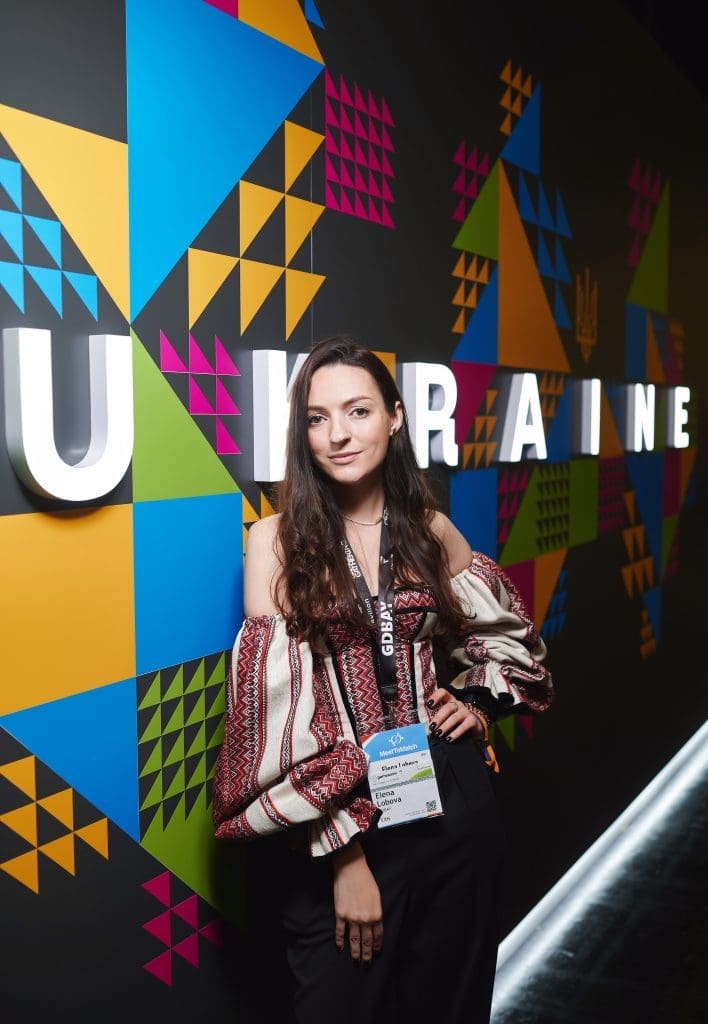
I decided to dedicate this edition to our full conversation. It is a masterclass in what it actually takes to keep a games business operating when your home country is at war.
Here is our interview.
Matan: When people see the Ukrainian booth at gamescom , they see games, meetings, and a polished professional presence. What is the most important part of that story they never see?
Olena: “What people see is the final result. What they don’t see is everything that happens before the booth even opens. Organizing a national booth at an event like Gamescom is always a complex process, but when your country is at war, every step becomes more complicated.
Many people don’t realize that Ukraine’s airspace has been closed since February 24, 2022. A journey that used to be a two or three hour flight now often takes more than 20 hours. Instead of simply boarding a plane, our teams travel by train or bus to the border, some of them spend hours crossing it, then continue to another country, sometimes stay overnight, and only then catch a flight to Germany.
Another thing people rarely realize is that many national pavilions at Gamescom are supported by their governments. Ukraine understandably has far more urgent priorities today, so our booth is funded and organized by the participating companies themselves, together with industry partners who believe in what we’re building.
What is perhaps least visible is the emotional side. Many of the people representing Ukrainian studios have family members living under missile attacks, colleagues serving in the Armed Forces, or homes they can no longer return to. Yet when Gamescom opens, everyone puts on a smile because our goal is not to ask for sympathy. Our goal is to demonstrate that Ukraine remains a serious, creative, and reliable part of the global games industry.”
Matan: What was the first major business decision you had to make after the full-scale invasion began, and what information did you have available at the time?
Olena: “The first major decision was about whether to cancel our big international event that was due to start the day after the full scale invasion began.
We had spent months preparing an international online game jam scheduled for February 25, 2022. More than 200 developers from over 30 countries had registered. We had sponsors, speakers, mentors, judges. Everything was ready to go.
Then, on the morning of February 24, everything changed.
I remember asking my team a simple question: Do we cancel, postpone, or continue? At that moment, we had almost no information. We didn’t know how long the invasion would last, whether our team members would still have internet access the next day, or even where everyone would be. Some colleagues were already in bomb shelters.
What surprised me most was the answer from the team. Every single person wanted to continue. Nobody felt obligated to do so. I made it very clear that canceling was a completely acceptable option, but they believed that continuing was the right thing to do.
So we did. Between February 25 and March 1, we successfully held the game jam. More than 200 developers participated, 28 game prototypes were created, sponsors and experts delivered their sessions, and many participants didn’t even realize until afterwards that the organizing team was coordinating the entire event from a country under invasion.”
(I completely understand this decision. Sometimes, work is the only thing that gives you a sense of control when everything else is falling apart).
I talk to the people building the gaming industry so you don’t have to. Hit Subscribe to ‘Inside the Game‘ at the top of this article for more behind the scenes interviews 🙂
Matan: What does business continuity mean in practical terms for a Ukrainian games company today?
Olena: “Business continuity has a very different meaning today than it did before 2022. Most companies used to think of it as having a disaster recovery plan that you hoped you would never need. For Ukrainian studios, it has become the way we operate every single day.
It starts with infrastructure. Teams have backup internet connections, generators, power banks, Starlink terminals where appropriate, and multiple ways to stay connected during outages. But technology is actually the easiest part.
The bigger transformation has been organizational. Teams are geographically distributed, responsibilities are shared rather than concentrated in one person, documentation has become much more detailed, and knowledge is deliberately spread across the company. You can’t build processes that depend entirely on one individual because circumstances can change overnight.
I sometimes say that Ukrainian companies have become exceptionally good at operating under uncertainty. Not because uncertainty is something we’ve chosen, but because we’ve had no alternative. The systems we’ve built over the past few years are remarkably resilient.”
(One thing that completely blew my mind during our talks was a massive hurdle most of us take for granted. Ukrainian companies cannot freely make international payments. Try running a studio or doing global business development with that restriction. It is absolute madness).
Matan: Can you describe a serious logistical problem or last minute crisis that visitors to a previous booth never knew occurred?
Olena: “One year, we discovered during booth construction that one entire side of our stand facing the main aisle was just a plain white wall. According to the approved design, it wasn’t supposed to be visible, so it had no branding whatsoever. From the main traffic flow, visitors could barely tell it was a Ukrainian booth.
At first, we were told nothing could be done because technically it was a gamescom wall rather than part of our stand. We started discussing every possible solution, from finding someone to paint a mural overnight to turning the wall into an interactive installation.
In the end, we received permission to use it. We covered it with a large Ukrainian flag, which transformed what had looked like a mistake into one of the most recognizable elements of the booth. Visitors never knew that just hours earlier we had been wondering whether anyone would even notice the Ukrainian booth. That’s probably the best summary of event organization: if people don’t notice the crisis, it means you’ve done your job well.”

Matan: How do you support people experiencing fear, displacement, military service, loss, or exhaustion while still protecting the company’s ability to function?
Olena: “I don’t think there’s a universal answer because people’s needs change over time. At the beginning of a crisis, you shouldn’t ask too much from each other. If someone has spent the night in a bomb shelter during a massive missile attack, it’s unrealistic to expect them to perform as if nothing happened.
At the same time, it’s important to remember that work itself can become a source of stability. In a prolonged crisis, meaningful work gives people structure, a sense of control, opportunities to solve complex problems, and confidence that there is a future to build. It also provides a healthy distraction from the constant flow of distressing news.
Finally, never underestimate the importance of morale. Celebrate milestones, even small ones. Create opportunities for people to spend time together. Remind them that their work has purpose: not only because they’re building great games, but because they’re supporting their colleagues, their families.”
Matan: What should the international games industry remember about Ukrainian developers when Ukraine is no longer receiving the same level of attention in the headlines?
Olena: “I hope the international games industry will continue to see Ukrainian developers for what they are: talented, reliable, and innovative partners, not just during the war, but long after it disappears from the headlines.
At the same time, I think it’s important to remember that doing business with Ukrainian companies is also one of the most meaningful ways to support Ukraine. Every publishing deal, outsourcing contract, or long term partnership creates jobs, helps companies grow, enables people to pay taxes, and gives them the resources to support their families, volunteer initiatives, and the country’s economy.
Of course, commercial decisions should always be based on the quality of the work and a good business fit. But when that fit exists, choosing a Ukrainian partner has an impact that extends far beyond a single project.”

Matan: When you think five years ahead, what do you hope the Ukrainian games industry, and the Ukrainian presence at Gamescom, will look like?
Olena: “I hope that, five years from now, the Ukrainian games industry will be talked about primarily because of its success. I want people to discuss great games, successful publishing deals, big mergers and acquisitions, and talented developers, not because we’re a country at war, but because we’re making a meaningful contribution to the global games industry.
Most of all, I hope that the Ukrainian booth won’t be seen as something extraordinary. I would love for it to become a tradition that people simply expect every year: a vibrant national booth full of great games, busy meeting schedules, and new companies making their international debut.
And if, by then, people no longer describe us as ‘surprisingly resilient’ but simply as trusted partners who build outstanding games, I think that will be the greatest sign that we’ve succeeded.”
Closing Thoughts
I visited Ukraine in 2018 on a student scholarship. I still remember going to the Odessa Opera with two friends. It was calm, beautiful, and full of life. That experience stayed with me to this day.
Thinking about the gap between that evening and the reality Olena and her colleagues face today is hard to process. But seeing how they adapt, recover, and find ways to keep moving forward is a lesson for anyone in this industry. Resilience isn’t some superpower you unlock. Sometimes, it’s just waking up exhausted and doing what needs to be done anyway.
We don’t want the international industry only to sympathize with Ukrainian developers. We want it to keep working with them.
As Olena requested, I want to leave you with something actionable. Please check out Gamedev Under Bombs, a charity initiative helping games industry colleagues and their family members on the frontlines. You can support them here: https://www.ggconference.com/en/gamedev-under-bombs/