
After spending an entire week playing Super Meat Boy 3D, it quickly became clear that this is not just another sequel but a genuine evolution of one of the most influential hardcore platformers ever made. The transition into full 3D fundamentally changes how the game feels, how players explore levels, and how every jump, wall run, and dash becomes a test of reflexes and spatial awareness. The result is an experience that feels fresh, challenging, and surprisingly playful, while still maintaining the ruthless identity the franchise is known for.
A Legendary Platformer Reinvented
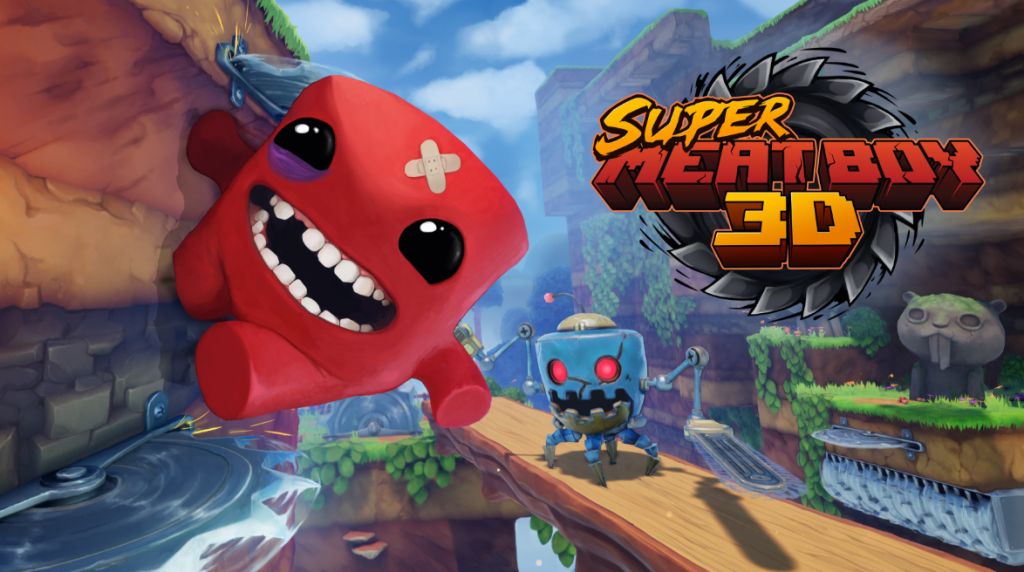
Super Meat Boy 3D represents the third main installment in the series and marks the franchise’s biggest design shift since its original release. Developed by Team Meat together with Sluggerfly and powered by Unreal Engine 5, the game transforms the classic precision platforming formula into a fully three-dimensional environment while preserving its core philosophy of instant retries and skill-based progression.
Players control Meat Boy, a small animated cube of meat attempting to rescue Bandage Girl from Dr. Fetus. The narrative remains intentionally absurd, but it serves as an effective framework for constant forward momentum. Instead of lengthy storytelling sequences, gameplay remains the dominant focus, emphasizing mechanical mastery rather than cinematic presentation.
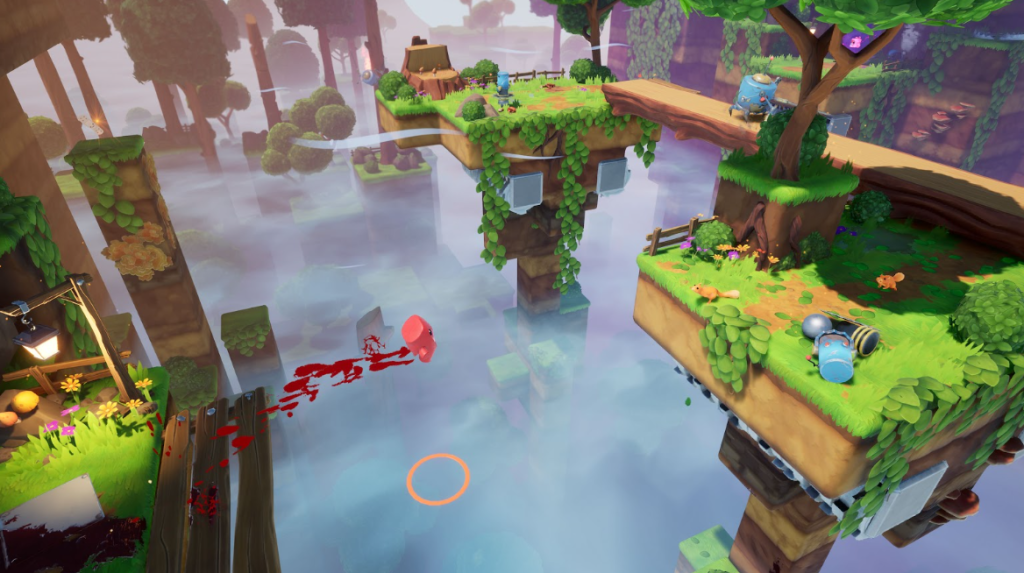
The move to 3D dramatically expands level navigation. Earlier titles relied on strict left-to-right movement, but here levels are built across depth, height variation, and multiple pathways. Exploration becomes a major element, encouraging players to search for hidden collectibles, alternate routes, and secret mechanics embedded throughout the stages.
Gameplay Mechanics and Movement Precision
The gameplay feels exceptionally responsive, which is crucial for a platformer built around millisecond reactions. Meat Boy retains signature abilities such as sprinting, wall jumping, and sliding along surfaces, but several new mechanics significantly deepen traversal options.
A mid-air dash allows players to extend jumps or correct trajectory mid-flight, while horizontal wall running introduces dynamic momentum-based movement rarely seen in traditional precision platformers. A ground pound mechanic enables fast vertical repositioning and interaction with destructible surfaces. These additions transform movement into a layered system combining timing, speed control, and spatial judgment.
Death remains instantaneous. Meat Boy has no health system; any contact with hazards such as buzz saws, crushers, lasers, or toxic waste immediately resets the level. Respawns occur within fractions of a second, creating a rapid retry loop that encourages experimentation rather than frustration.
Difficulty scaling is carefully structured. Early levels introduce mechanics gently, allowing players to understand physics and camera behavior before later stages escalate into extremely demanding obstacle combinations. By the later worlds, gameplay requires chaining wall runs, air dashes, and precision landings under intense pressure.
Level Design, Secrets, and Interactive Worlds
One of the most impressive aspects of the game is how interactive environments feel from the very beginning. Players encounter numerous elements that can be touched, activated, or manipulated, and not all environmental characters are lethal. Unexpected encounters, including humorous enemies such as armed squirrels wandering early levels, add personality and surprise without breaking the game’s difficulty curve.
Each level contains hidden bandages placed in difficult or cleverly concealed locations. Obtaining them often requires deviating from the main path or mastering advanced movement techniques. Collectibles are not cosmetic alone; they encourage exploration and reward mastery of level geometry.
The game includes approximately 75 primary levels alongside multiple boss fights and hidden stages. Completing levels within target times unlocks Dark World variants, which redesign familiar stages into far more punishing configurations filled with denser traps and tighter timing windows. These Dark World levels push the precision platforming formula to its absolute limits.
After completing a stage, the game displays all failed attempts simultaneously, visually demonstrating learning progression and reinforcing the “one more try” philosophy that defines the series.
Visual Presentation and Technical Performance
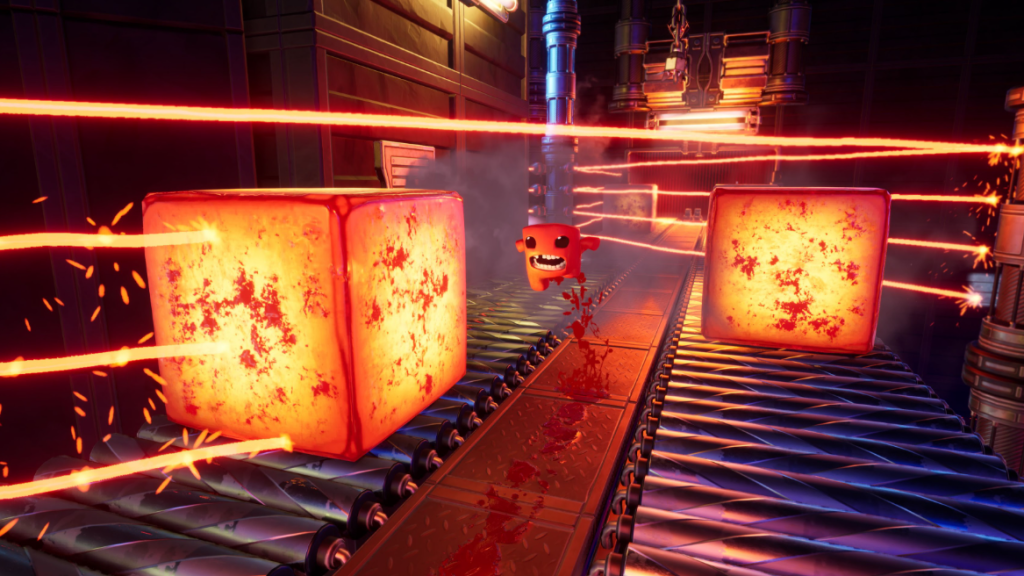
Graphically, Super Meat Boy 3D looks excellent across platforms. Built using Unreal Engine 5, environments feature improved lighting, detailed textures, and expanded environmental storytelling compared to previous entries. Worlds range from burning forests and industrial factories to massive garbage dumps and mechanical forges producing the very traps designed to kill the player.
Despite its visual upgrade, performance remains impressively stable. The game runs smoothly on Nintendo Switch 2, maintaining consistent frame pacing and responsive controls even during intense sequences filled with moving hazards and particle effects.
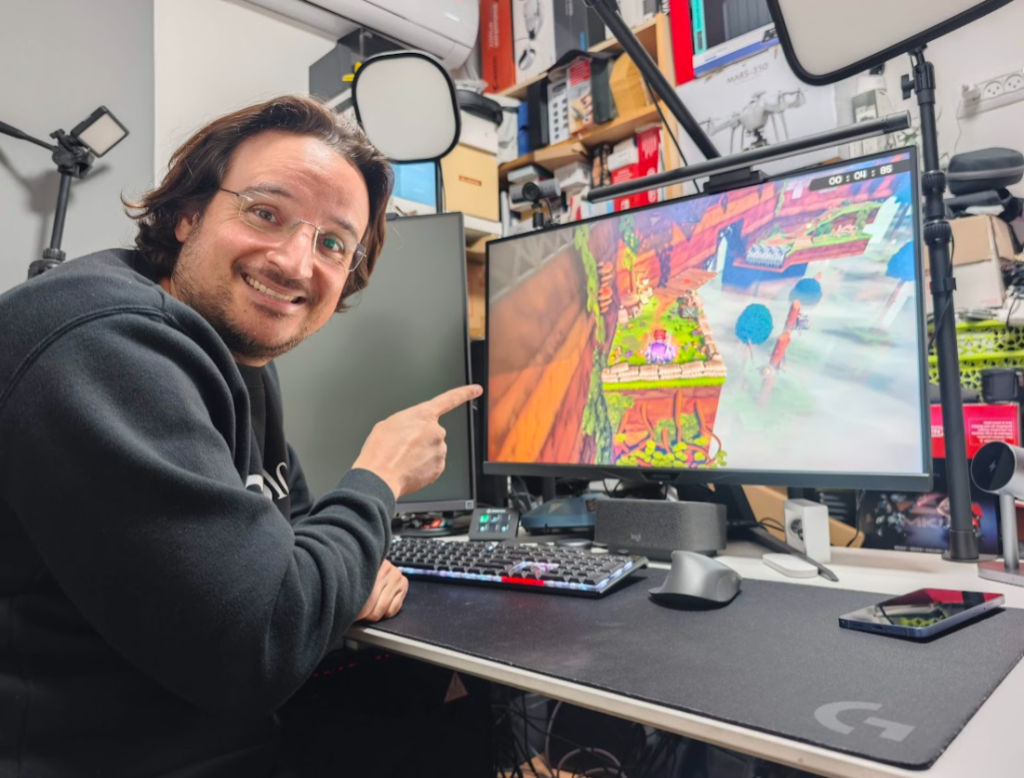
Testing on two different PC systems demonstrated strong optimization. One system lacked a dedicated graphics card yet still delivered stable performance, highlighting efficient scalability and well-balanced graphical settings. Load times are minimal, animation transitions are fluid, and input latency remains extremely low, all critical factors for precision platforming.
Camera behavior occasionally introduces depth perception challenges, especially during long jumps onto small platforms. However, adaptation occurs naturally after extended playtime, and the camera rarely undermines overall enjoyment.
Boss Fights and Challenge Structure
Boss encounters introduce unique mechanics that differ from standard platforming sections. Instead of pure traversal challenges, bosses require pattern recognition, rapid reaction timing, and environmental awareness.
Each boss escalates complexity by combining movement mechanics learned throughout previous stages. Players must dodge hazards while executing precise jumps under pressure, transforming boss fights into tests of accumulated skill rather than isolated gimmicks.
The difficulty progression ranges from challenging to extremely demanding. Early completion may take seconds, but later levels often require dozens of attempts. Importantly, deaths feel fair. Failures result from player mistakes rather than unpredictable design, reinforcing motivation to retry rather than abandon progress.
Sound Design, Atmosphere, and Player Experience
The soundtrack complements the fast-paced gameplay with energetic, aggressive compositions that amplify tension during difficult sequences. Audio feedback plays a major role in gameplay clarity, providing cues for jumps, collisions, and environmental interactions.
The overall atmosphere balances absurd humor with relentless intensity. Visual gags, strange enemies, and exaggerated animations prevent frustration from becoming overwhelming. Even repeated failure becomes entertaining due to the game’s fast rhythm and responsive controls.
After a full week of play, the experience remains consistently engaging. Exploration feels rewarding, mechanics continue evolving, and hidden elements encourage revisiting completed stages. The shift to 3D fundamentally refreshes the franchise while retaining its identity.
Technical Specifications and Platform Availability
Super Meat Boy 3D launched on March 31, 2026 for Nintendo Switch 2, PlayStation 5, Windows PC, and Xbox Series X and Series S. The game supports single-player gameplay focused entirely on mechanical skill progression.
The Unreal Engine 5 foundation enables modern rendering features while maintaining broad hardware compatibility. Performance optimization allows smooth gameplay across both high-end systems and modest PC configurations, demonstrating strong engineering priorities centered on responsiveness.
The absence of auto-running mechanics seen in previous spin-offs returns control fully to the player, restoring the manual precision that defined the original games. Combined with new movement systems and expanded environments, the result feels like a natural evolution rather than a reinvention disconnected from the series roots.
Conclusion
Super Meat Boy 3D succeeds in transforming a legendary precision platformer into a fully realized three-dimensional experience without losing the spirit that made the franchise iconic. Exceptional gameplay responsiveness, cleverly designed levels, abundant secrets, strong technical performance, and meaningful mechanical expansion create a platformer that feels both nostalgic and entirely new. For fans of hardcore platformers and anyone who loved the original game, this is an essential experience that rewards persistence, exploration, and mastery.