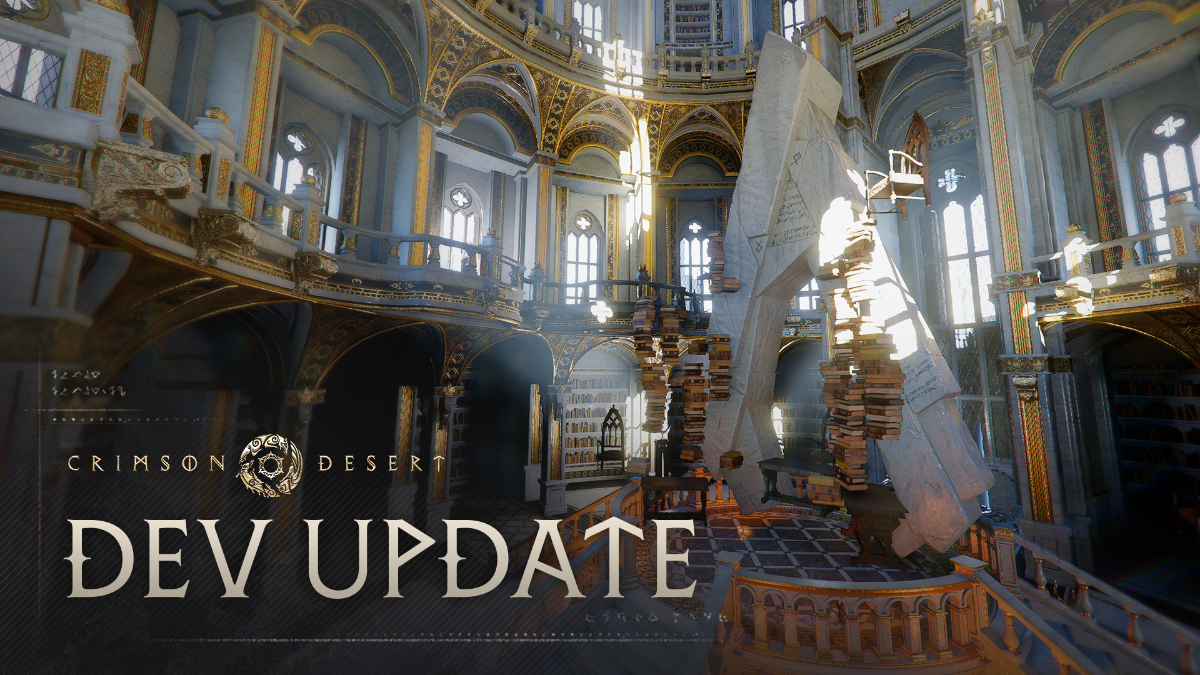
Following the successful global launch of Crimson Desert, developer Pearl Abyss has revealed an extensive roadmap outlining upcoming content updates scheduled between April and June 2026. The announcement highlights a broad wave of gameplay expansions, technical refinements, and quality-of-life improvements shaped heavily by player feedback gathered during the game’s first weeks on the market.
Designed as a living open-world experience rather than a static single-player release, Crimson Desert continues evolving through systematic updates that focus on long-term engagement, deeper combat systems, and expanded progression mechanics. The development team emphasized that ongoing monitoring of player behavior, community discussions, and gameplay data remains central to how new features are prioritized and implemented.
Expanding the Endgame Experience and Replayability
One of the most significant focuses of the upcoming updates is improving endgame longevity. Many open-world action RPGs struggle to retain players once the main narrative concludes, but Pearl Abyss appears to be addressing this challenge directly through structured replay systems and dynamic world reactivity.
The introduction of a Boss Rematch system allows players to revisit previously defeated major encounters. Rather than functioning as simple replays, these rematches are expected to incorporate refined AI behavior, adjusted damage scaling, and potentially altered mechanics that encourage mastery rather than repetition. Boss encounters in Crimson Desert already rely on timing-based melee combat, stamina management, and environmental interaction, meaning replayable battles significantly extend mechanical depth for experienced players.
Complementing this system is the Re-blockading feature, where liberated locations across the continent of Pywel may fall back under enemy control. This transforms conquered regions into evolving battlegrounds rather than permanently cleared zones. From a design standpoint, this approach mirrors persistent-world philosophies typically found in MMORPG environments, reinforcing dynamic progression loops and providing players with renewed combat objectives without requiring entirely new map expansions.
Adjustable Difficulty and Player Agency
Difficulty balancing has become a central pillar of modern action-adventure design, especially for titles combining cinematic storytelling with demanding combat systems. The upcoming update introduces three selectable difficulty modes — Easy, Normal, and Hard — enabling players to tailor their experience based on skill level or desired pacing.
Easy mode is expected to reduce enemy aggression frequency, incoming damage multipliers, and reaction windows required for parries and counters. This ensures narrative-focused players can explore Pywel’s story without being constrained by mechanical barriers. Conversely, Hard mode is anticipated to increase enemy coordination, stamina punishment, and boss phase complexity, effectively creating a semi-hardcore experience closer to advanced action RPG standards.
From a technical perspective, implementing scalable difficulty post-launch requires recalibration across multiple subsystems, including animation timing, AI decision trees, hit detection thresholds, and progression economy. The inclusion of adjustable difficulty indicates Pearl Abyss is moving toward broader accessibility while preserving depth for expert players.
Character Skill Expansion and Combat Refinement
Character progression is also receiving meaningful attention. New abilities are being added to Damiane and Oongka, bringing their combat capabilities closer to those of protagonist Kliff. This adjustment suggests the developers aim to reduce perceived power disparity between playable or companion characters, allowing for more diverse combat strategies and team compositions.
The new skills are expected to expand ability trees rather than replace existing mechanics. Additional attack chains, mobility skills, and situational abilities could significantly alter encounter approaches, especially during large-scale battles where positioning and crowd control already play critical roles. Enhancing secondary characters also encourages experimentation, increasing replay value through varied combat styles.
Visual immersion improvements accompany gameplay changes. A Back Weapon Visibility Toggle will allow players to hide weapons mounted on character backs when not actively used. While seemingly minor, such customization reflects growing player demand for cinematic realism and personalized character presentation within modern open-world titles.
Outfit Systems and Player Customization Evolution
Character appearance customization continues expanding through new outfit additions and system revisions. Pearl Abyss confirmed that several outfits previously restricted to sales events or donation campaigns will become fully equippable items, effectively integrating cosmetic rewards into normal gameplay progression.
This transition signals a shift toward player accessibility and long-term engagement rather than exclusivity. By allowing cosmetic ownership through gameplay rather than limited distribution windows, the developers reinforce sustained participation across the player base.
Beyond aesthetics, outfit systems often intersect with gameplay mechanics such as armor classification, stat modifiers, environmental resistance, or movement bonuses. Expanding wardrobe functionality may therefore influence both role-playing immersion and tactical optimization, particularly for players balancing appearance with performance efficiency.
Expanded Storage Systems and Quality-of-Life Improvements
A major portion of the announced roadmap focuses on systemic usability improvements. Open-world RPGs frequently face inventory management challenges due to large quantities of materials, equipment, and quest items accumulated during exploration. Pearl Abyss plans to address this through multiple specialized storage systems.
A dedicated Food Storage will allow direct access to cooking ingredients without manual inventory transfers, streamlining crafting workflows. Meanwhile, a Wardrobe system separates outfits and armor from general inventory slots, preventing clutter while improving equipment organization.
Additional storage categories include Gatherables Storage for resources such as insects, stones, and ores, and Collections Storage for recipes, quest items, and collectible progression elements. These changes reduce friction in gameplay loops by minimizing menu navigation time and enabling players to focus more heavily on exploration and combat.
From a design perspective, inventory segmentation represents a significant backend restructuring. Such systems typically require database optimization, item classification logic updates, and UI restructuring to maintain performance stability across platforms.
Pets, Mounts, and World Traversal Enhancements
Traversal and companionship mechanics are also evolving through expanded pet and mount systems. New pets will be introduced, potentially offering passive bonuses such as loot collection efficiency, detection abilities, or environmental interaction support.
The update also expands summonable mount options beyond traditional horses, alongside new equipment customization systems for mounts. Mount gear could include armor plating, speed modifiers, stamina enhancements, or traversal abilities suited for varied terrain types across Pywel’s diverse geography.
Enhancing mounts significantly impacts gameplay flow in large open worlds. Improved mobility reduces travel fatigue, encourages exploration of distant regions, and supports emergent encounters. These updates align with Crimson Desert’s emphasis on a living continent filled with dynamic activities rather than static mission hubs.
Technical Improvements and Visual Fidelity Upgrades
Pearl Abyss continues refining the technical foundation of the game through multiple interface and graphical improvements. Upcoming UI updates include adjustable font sizes and enhanced interface clarity, ensuring readability across different display setups, resolutions, and accessibility needs.
Control customization is also expanding with additional remapping options for controllers and extended configurable keys for mouse and keyboard users. Such flexibility is increasingly essential for PC releases, where players expect granular control layouts tailored to personal playstyles.
Visual improvements focus on distant scenery rendering. Enhancements to landscape LOD (Level of Detail) systems, atmospheric lighting transitions, and horizon rendering aim to reduce pop-in effects and maintain environmental immersion during high-speed traversal. Because Crimson Desert utilizes Pearl Abyss’ proprietary engine technology, these optimizations likely involve shader refinement, improved streaming pipelines, and more efficient memory allocation.
Original Soundtrack Release and Cross-Platform Availability
Alongside gameplay updates, players will receive a free Original Soundtrack DLC distributed via Steam. The official soundtrack will also launch across major global music streaming platforms, expanding the game’s presence beyond interactive media into broader entertainment ecosystems.
Music plays a crucial role in Crimson Desert’s identity, supporting large-scale battles, emotional narrative sequences, and environmental exploration. Offering the soundtrack independently reinforces community engagement while strengthening the franchise’s brand recognition.
The title is currently available across PlayStation 5, Xbox Series X|S, PC via Steam and Epic Games Store, as well as Apple Mac platforms, reflecting Pearl Abyss’ commitment to wide hardware accessibility.
Development Philosophy and Future Direction
The developers stressed that all announced features remain in active development and may evolve prior to release. This transparency highlights an iterative development philosophy increasingly common among modern AAA and live-service hybrid titles.
Rather than positioning launch as the endpoint, Pearl Abyss treats Crimson Desert as an expanding ecosystem shaped collaboratively by players and developers. Continuous updates informed by real gameplay data allow systems to mature organically while addressing balance concerns and usability challenges.
The company’s experience developing long-running online titles appears to influence this approach, blending single-player storytelling with persistent-world progression philosophies typically associated with online RPG environments.
Summary
The upcoming April-to-June update cycle represents a substantial evolution for Crimson Desert, focusing on replayability, accessibility, customization, and technical refinement. New boss rematches, adjustable difficulty options, expanded character skills, and improved storage systems collectively deepen gameplay while addressing early player feedback. At the same time, visual upgrades, interface enhancements, and expanded mount systems strengthen immersion and world interaction.
By combining systemic improvements with new content rather than relying solely on expansion packs, Pearl Abyss demonstrates a long-term commitment to sustaining player engagement. If successfully implemented, these updates position Crimson Desert not only as a visually ambitious open-world action adventure but also as a continuously evolving platform capable of maintaining relevance well beyond its initial launch window.