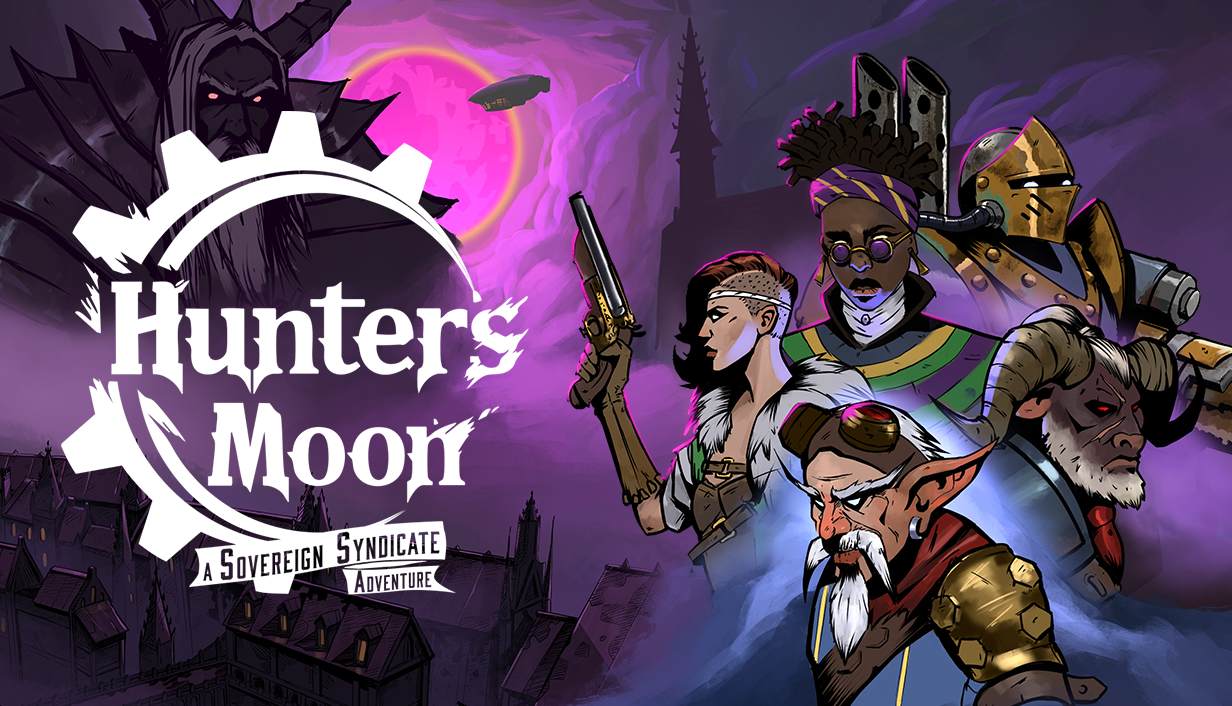
Hunter’s Moon: A Sovereign Syndicate Adventure is a single-player Victorian steampunk roguelite deckbuilder developed by Crimson Herring Studios and published by Zugalu Entertainment. Released on November 24, 2025, it spins off (and narratively precedes) Sovereign Syndicate, swapping that game’s tarot-driven roleplaying focus for a run-based structure built around turn-based card combat, meta-progression, and repeatable “one more run” optimization.
Under the hood, it’s also a notably modern-feeling indie production: it’s built in Unity (with signs of Unity’s performance toolchain in the shipped build pipeline), supports Steam Cloud and 31 Steam Achievements, ships with a demo, and targets a broad localization footprint with English full audio + subtitles and additional subtitled languages.
A gaslamp London where nature is breaking
The pitch is immediately flavorful: a mysterious plague is corrupting the natural order, turning wildlife (and worse) into grotesque threats that spill out of forests and alleyways. The game leans into horror theming—werewolves, “body-horror zombies,” and sanity-tilting hallucinations—while keeping the presentation in a stylized, illustrated space rather than going for photoreal gore.
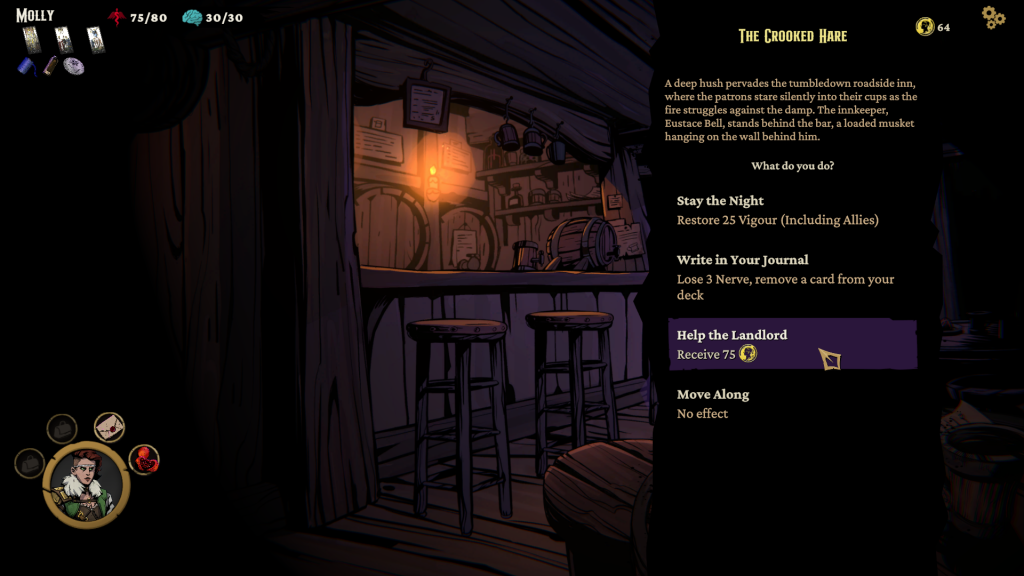
What makes the setting pop is the contrast between industrial rationality (airships, weaponcraft, alchemy-as-engineering) and cosmic wrongness (Lovecraftian corruption, uncanny beasts, and the creeping sense that reality is porous). It’s not just “steampunk wallpaper”; the fiction is designed to justify mechanical systems like relics, tarot modifiers, and escalating boss encounters as manifestations of a spreading blight.
A prequel with mission-based structure
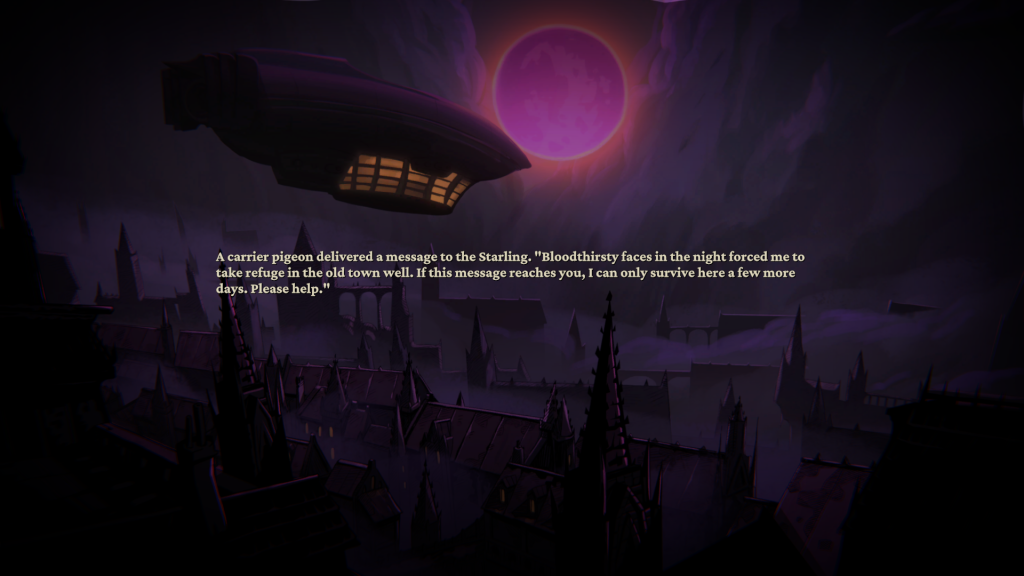
Narratively, Hunter’s Moon positions itself as a return to the Sovereign Syndicate universe before the events of the first game, framing each run as an operation carried out by “agents” trying to identify the source of the plague and push toward a cure.
Instead of one continuous CRPG-style investigation, the story delivery is built to survive repetition. The game is structured across four chapters, with new locations, enemies, and bosses introduced as you progress—so a failed run is still a data-gathering expedition that feeds the next attempt, both mechanically and narratively.
Runs, resets, and why “failure” still matters
At a macro level, the loop is classic roguelite: you embark, you fight through encounters, you either succeed or retreat/fail—and then you come back stronger. What Hunter’s Moon emphasizes is resource carryover: money, cards, items, relics, and salvaged materials persist as a form of long-tail progression.
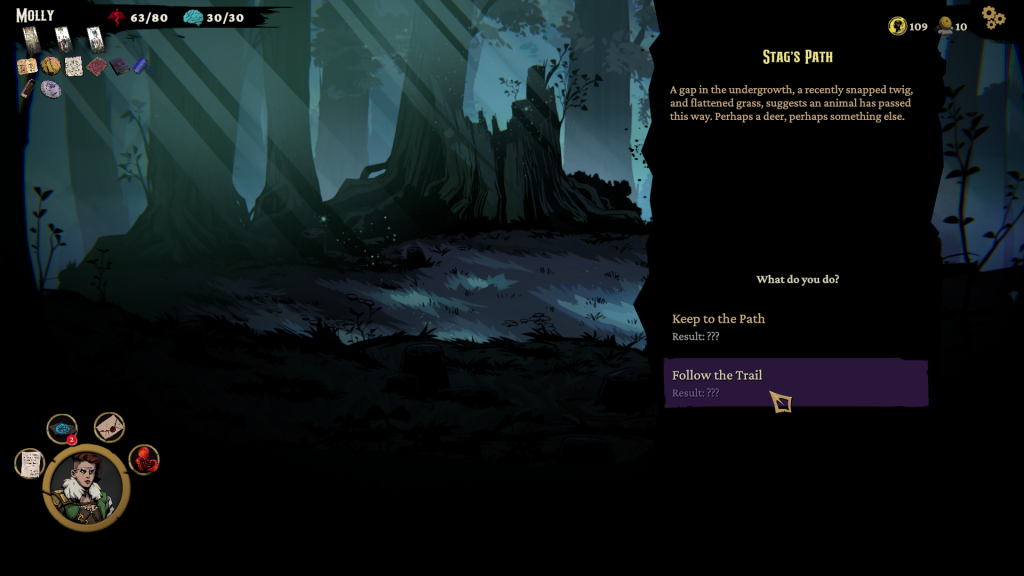
That persistence is key for pacing. It means the game can afford to throw spiky difficulty curves at you (a nasty elite encounter, a boss with punishing traits) because your time wasn’t “wasted.” The run becomes a scouting mission: you learn enemy patterns and deck synergies, and you also bank materials that widen your strategic options for the next attempt.
An upgrade layer tied to the airship and your roster
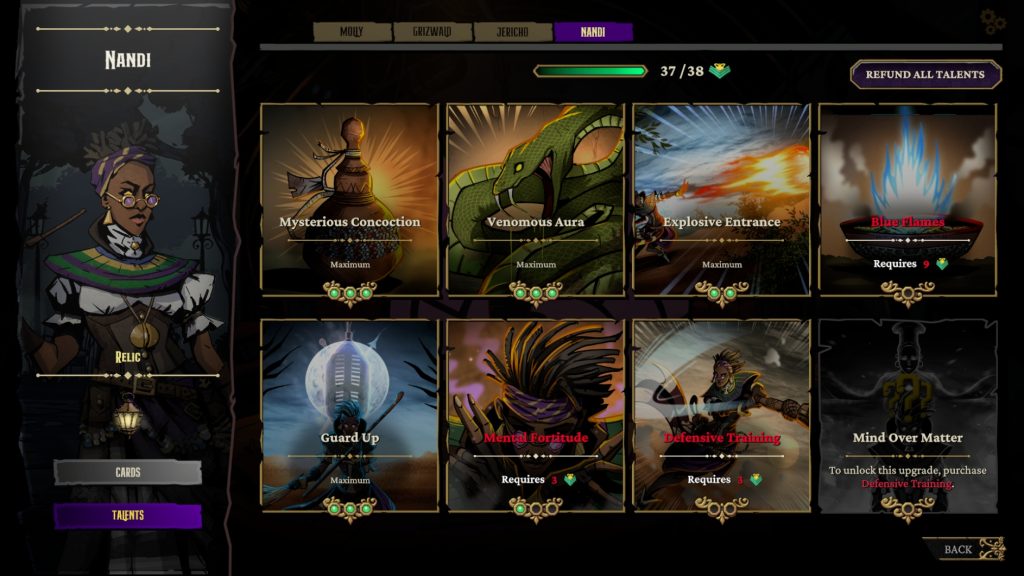
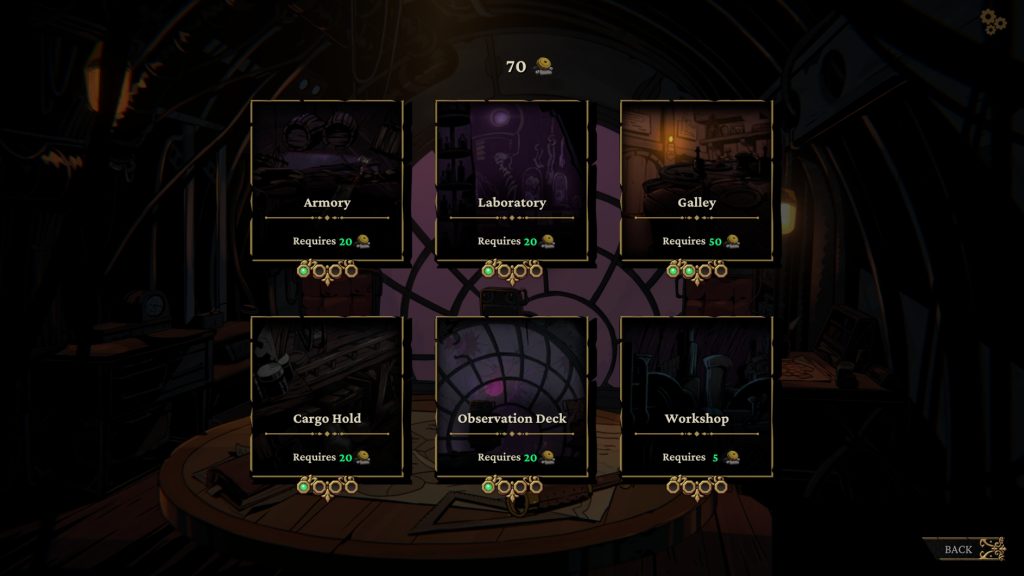
The meta progression isn’t just a generic talent tree; it’s explicitly tied to improving your agents, your airship, and your next run. That airship concept does a lot of work: it provides a diegetic “home base” for upgrades, explains how you redeploy after disaster, and gives the designers a natural place to gate unlocks without it feeling like a menu spreadsheet.
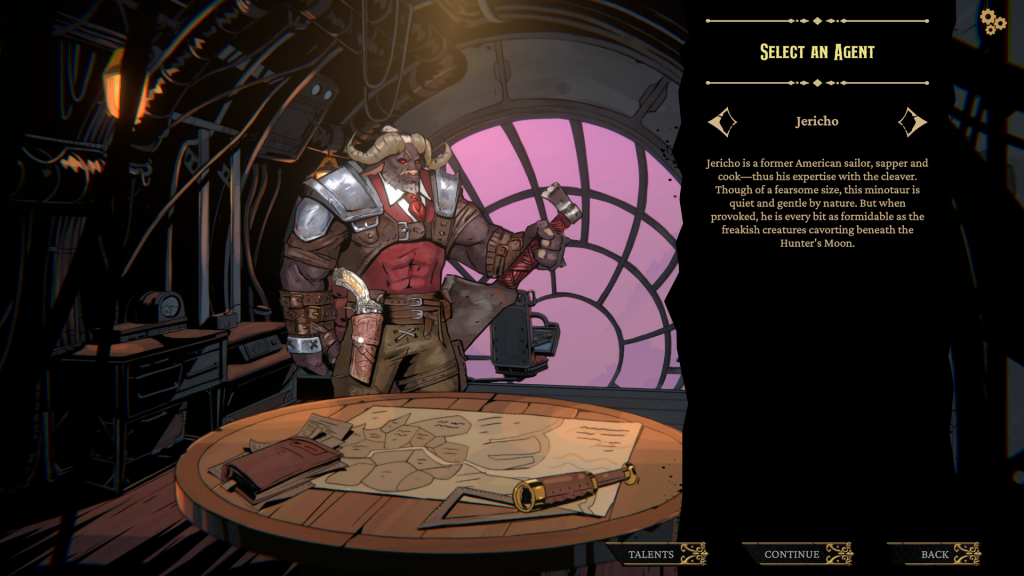
It also supports a satisfying sense of account-level growth. Even if you’re experimenting with a fragile build and it collapses, your broader infrastructure improves, which nudges you toward trying bolder lines: greedier decks, riskier routes, and more specialized card upgrades that would be too punishing early on.
Turn-based, trait-driven battles
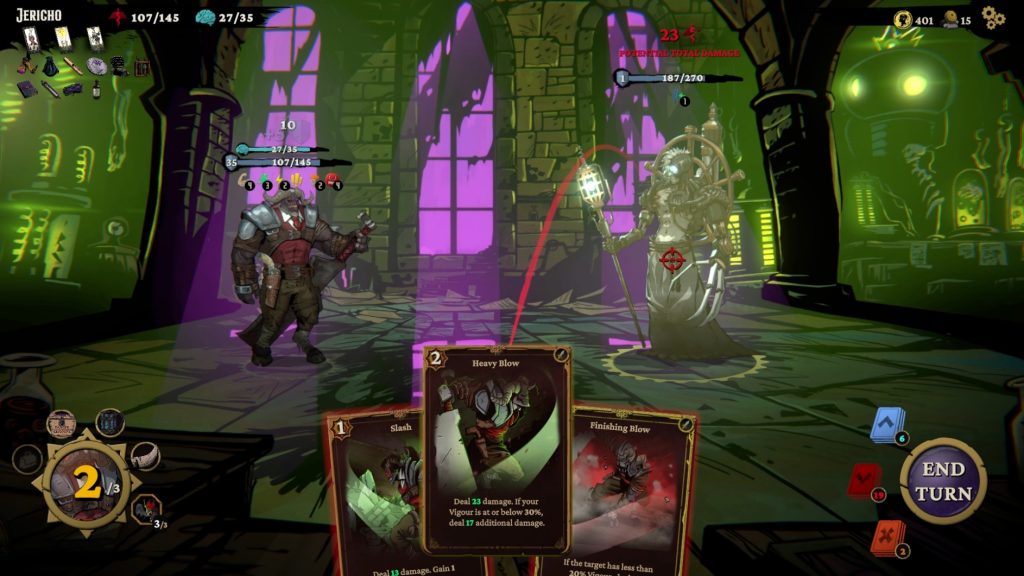
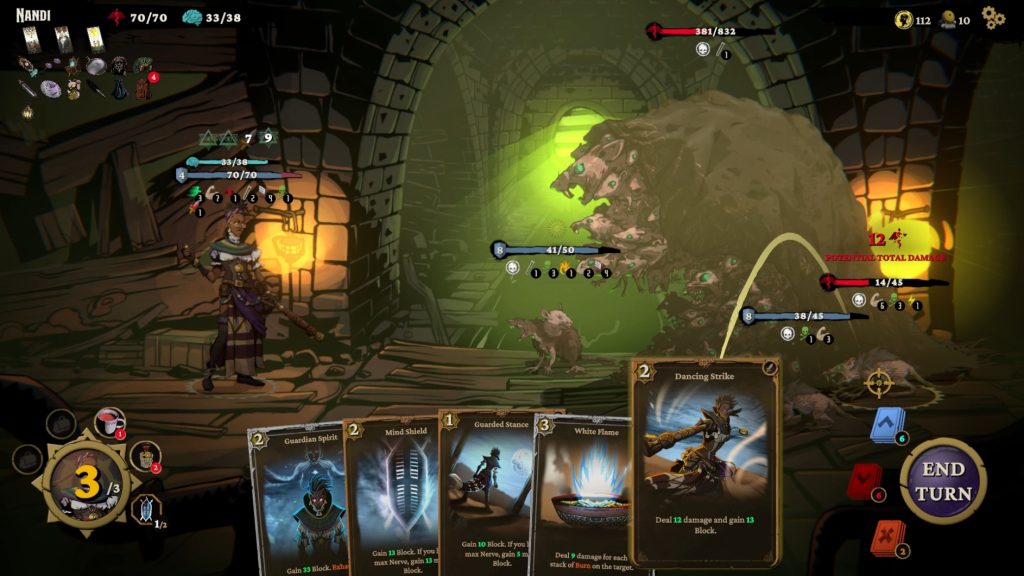
Combat is fully turn-based and card-driven, built around tactical sequencing: what you play now changes what you can survive later in the round (and how efficiently you convert energy/actions into damage, defense, and utility). The game explicitly encourages you to learn enemy traits and tactics—a strong hint that foes are built with readable “rules,” not just stat inflation.
That trait focus matters because it pushes you toward counterplay decks rather than raw DPS piles. In practice, games like this live or die on whether enemies create interesting constraints (punishing multi-hit, punishing block stacking, debuffing greedy draw engines), and Hunter’s Moon signals that it wants you studying boss patterns the way you’d study a puzzle: identify the mechanic, pack answers, execute cleanly.
Readability: a deliberate “slower” roguelite tempo
Several reviewers describe the game as more moody than twitchy—less about speed-running and more about decision weight. That design choice pairs well with a horror-leaning setting: when the game encourages you to slow down, it gives the atmosphere room to breathe and makes fights feel like desperate skirmishes rather than routine farming.
Mechanically, slower tempo often means encounter design has to be tighter: telegraphs must be clear, status effects must be understandable, and the UI has to make intent readable. While tastes vary, the overall goal is obvious: keep the player in a loop of observe → plan → commit, so victory feels earned through sequencing and deck construction, not reflexes.
Four agents, four card ecosystems
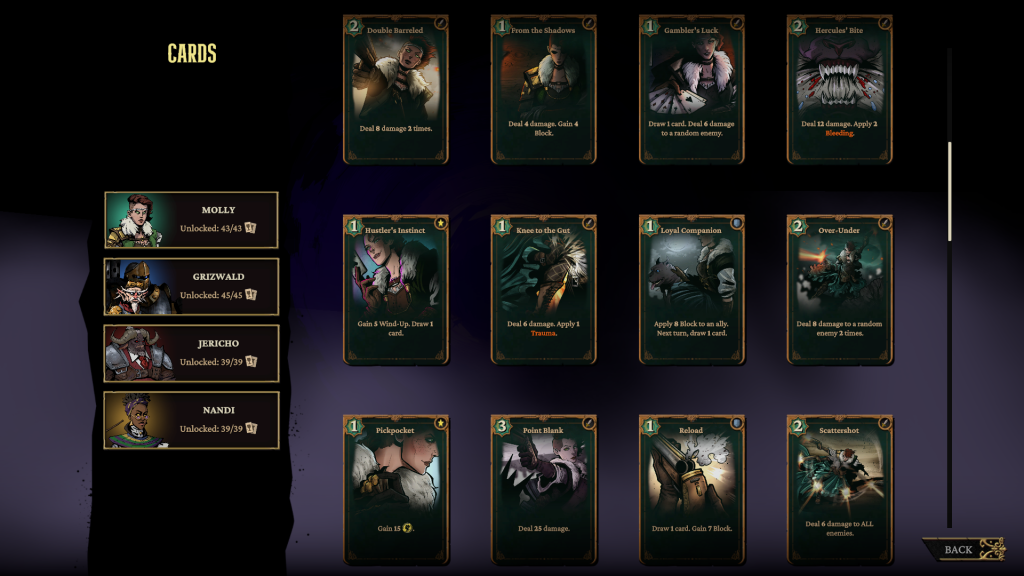
A defining feature is the roster: you choose from four unique characters/classes, each with distinct cards and abilities. The official descriptions sketch archetypes that map cleanly to deckbuilder roles: a brute who smashes, a soldier with weapons expertise, and an alchemist using potions/poisons/explosives (with the fourth implied as another distinct playstyle).
This matters because the “feel” of a roguelite deckbuilder is often determined by how separate the class ecosystems truly are. If each agent has genuinely different engines—different resource rules, different scaling vectors, different defensive identities—then the game isn’t just “four skins,” it’s four strategy sandboxes. Hunter’s Moon sets itself up to deliver that variety through class-locked cards plus run modifiers (tarot and relics) that can bend your archetype.
Card upgrades and “hundreds of variations”
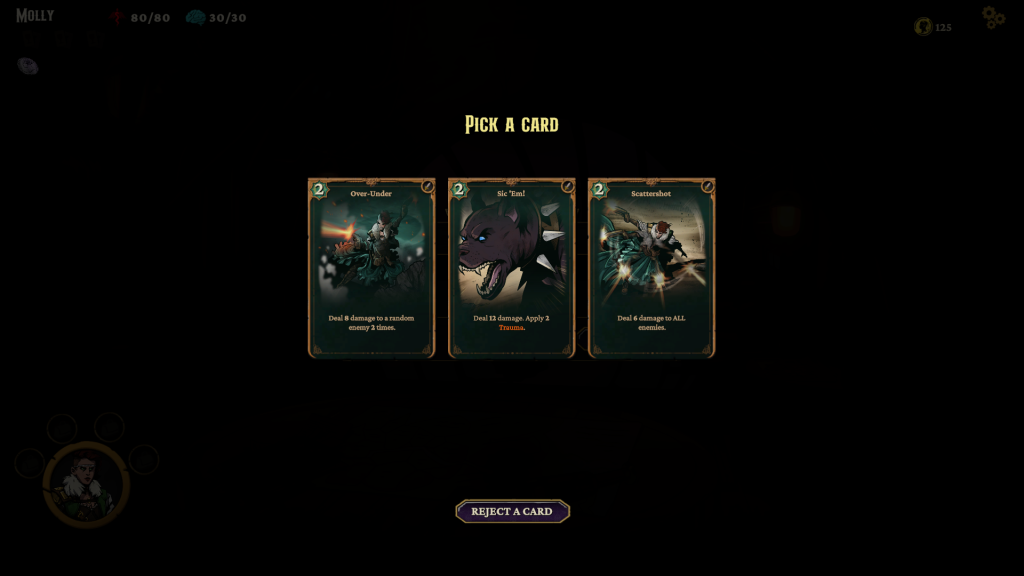
The deck layer is described as dynamic: each agent has a unique set of cards; you “craft your deck from hundreds of variations,” and you can upgrade cards to increase power.
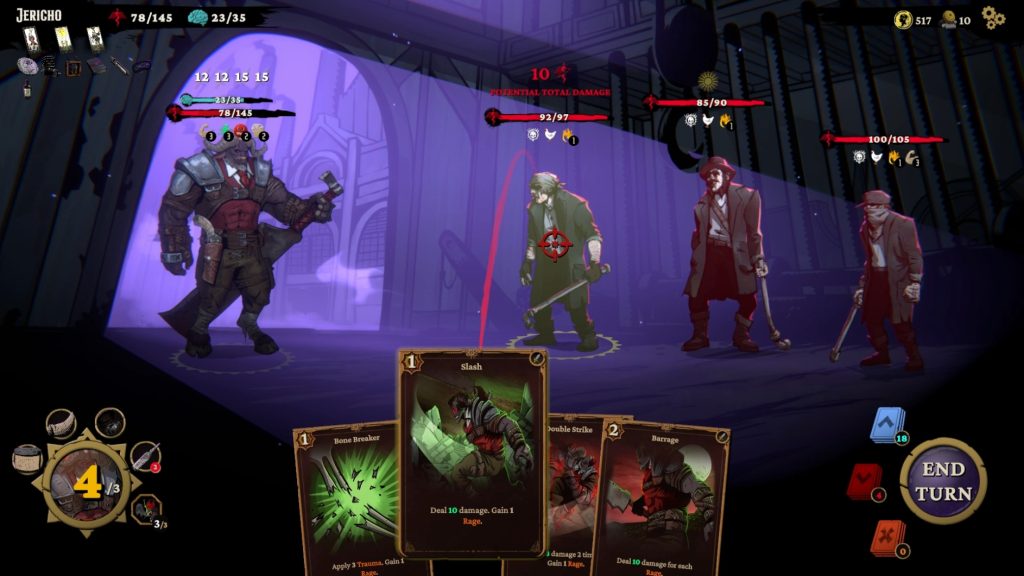
From a systems perspective, upgrades do two things. First, they reduce the sting of RNG by letting you refine what you’re given (a mediocre card becomes build-defining after an upgrade path). Second, they create build identity over time: instead of your deck being a pile of draws, it becomes a curated toolkit where even common cards can become signature pieces if you invest in them.
Enchanted tarot as modular rule changes
The most distinctive “Sovereign Syndicate DNA” is the tarot system. Here, you unlock enchanted tarot cards that modify your run, and—crucially—you can combine their effects to improve your odds.
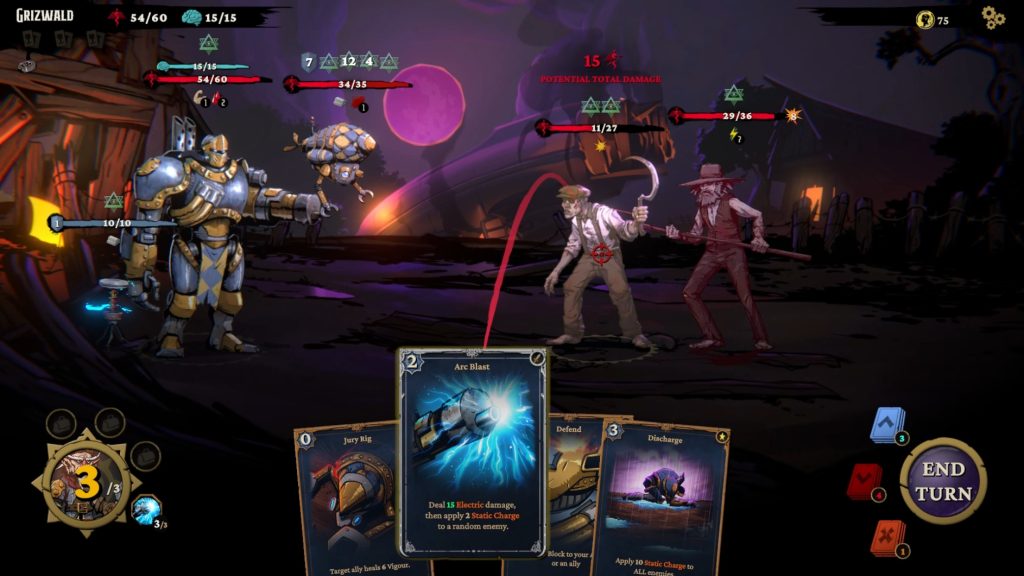
Mechanically, tarot works like a meta layer of rule toggles: it can push you toward specific archetypes (status builds, crit chains, block scaling), or it can reshape the risk profile of your run (more rewards, harsher elites, stronger shops). When tarot effects stack, the space of possible “build worlds” multiplies, which is a big driver of replayability in games that want you theorycrafting long after you’ve learned the basic card pool.
Relics and persistent loot as long-tail progression
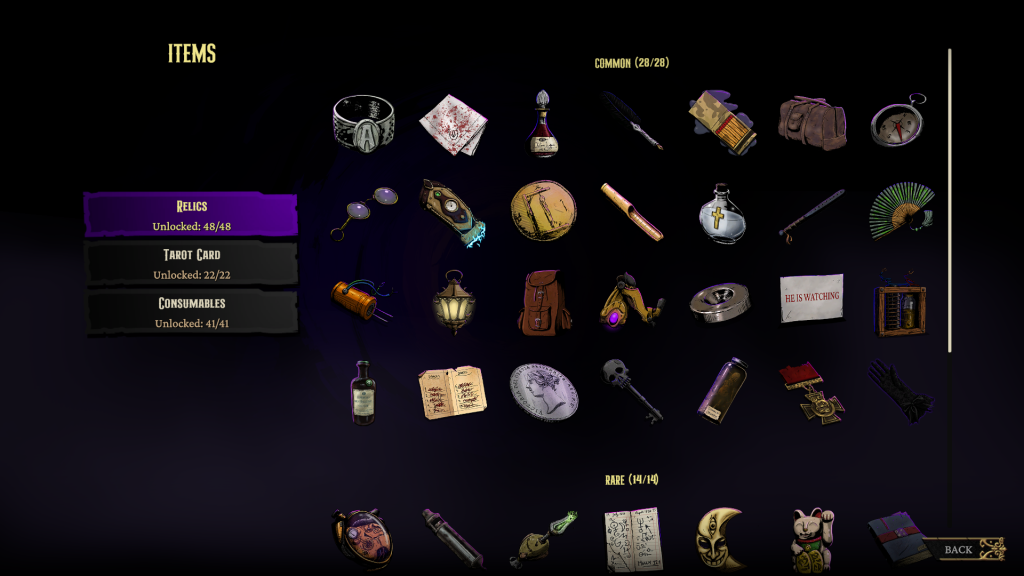
Alongside tarot, you unlock and collect relics—classic deckbuilder tech that adds passive powers and weird synergies. The game also leans into salvaged materials and other loot that carry forward into upgrades, so your run isn’t just “did you win,” but “what did you extract?”
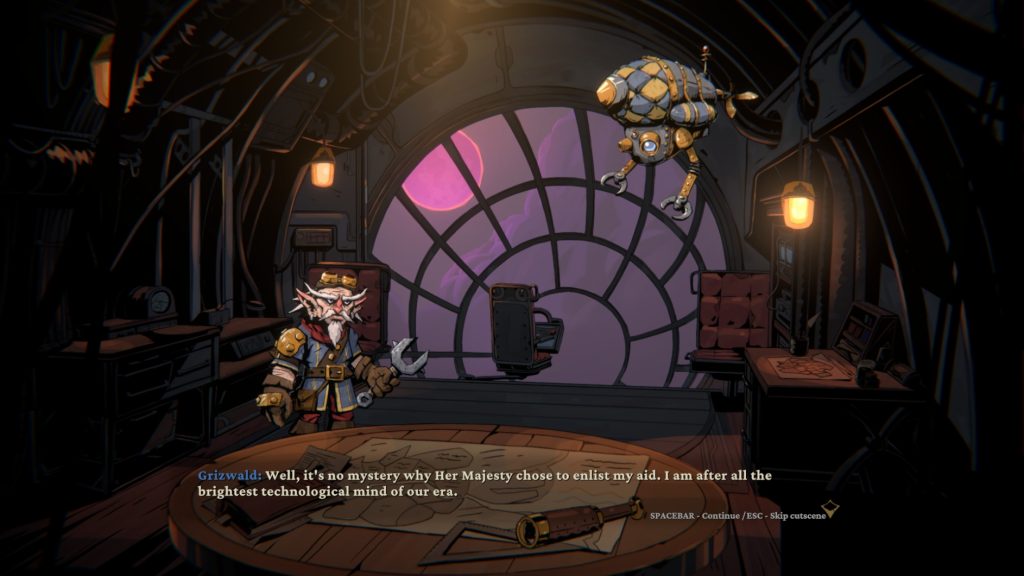
That extraction mindset pairs nicely with the airship framing: you return with spoils, retrofit your operation, and head back out better equipped. It’s a clean narrative wrapper for what is, in pure systems terms, a loop of resource acquisition → permanent upgrades → expanded build space.
Engine, toolchain signals, and performance posture
Hunter’s Moon is built in Unity. Beyond that headline, SteamDB’s detected tech list suggests a fairly contemporary Unity stack: Unity URP (Universal Render Pipeline) for rendering, Unity Burst for performance-focused compilation, plus SteamworksNET for Steam integration.
This combination is a practical fit for a 2D/illustrated card battler with lots of UI and effect logic. URP can provide efficient post-processing and lighting for “moody” presentation, while Burst is typically used to keep heavy computations from bogging down—useful if the game simulates many status effects, triggers, and AI decision rules per turn. SteamworksNET rounds it out by handling achievements, cloud saves, and platform hooks without reinventing the wheel.
System requirements and build size
On PC, the published requirements are modest: minimum Windows 10, Intel Core i3-3110M (2.4 GHz), 4 GB RAM, GTX 760 (or equivalent), DirectX 11, and 6 GB of storage; recommended bumps to i5-8600K, 8 GB RAM, and GTX 1080.
SteamDB also reports a disk footprint around the mid–single-digit gigabyte range (with Windows/English filtered totals in that neighborhood), which is consistent with a fully voiced, art-forward indie deckbuilder rather than a tiny minimalist one. Meanwhile, on GOG, the game is advertised as DRM-free, which can matter for long-term archival-minded players and offline installs.
Steam + GOG distribution and content extras
At release, the game landed in a genre sweet spot: “roguelite deckbuilder” is crowded, but Hunter’s Moon uses theme and narrative delivery to distinguish itself. Reviews tend to highlight the pull of the setting and the satisfaction of its core loop, even when noting its building on recognizable foundations.
Steam user reviews at the time of writing trend Very Positive, suggesting the target audience is connecting with the execution—especially players who like slower-burn, atmosphere-heavy roguelites rather than hyper-kinetic ones.
Where it fits: narrative deckbuilder, not pure math sandbox
If you want an ultra-pure “spreadsheet deckbuilder” that’s all about optimization and minimal story, Hunter’s Moon may feel more novelistic than necessary. But if you like deckbuilding as a delivery system for tone, worldbuilding, and mission drama, this is exactly the lane it’s driving in: story-rich progression, chapter structure, and a grimy London steeped in corruption.
It also benefits from being attached to an existing universe. Even if you never played Sovereign Syndicate, the prequel framing gives the fiction a sense of direction—your runs aren’t abstract ladders, they’re attempts to get ahead of an unfolding catastrophe.
Our thoughts
Hunter’s Moon: A Sovereign Syndicate Adventure is a Victorian steampunk, horror-leaning roguelite deckbuilder that uses four distinct agents, turn-based trait-driven combat, deep deck customization with card upgrades, and a layered modifier stack of relics + enchanted tarot cards to keep runs strategically fresh.
Technically, it’s a modern Unity production (with URP/Burst and Steam platform integration signals), it ships with pragmatic PC requirements, supports key Steam features like Cloud and Achievements, and is also available DRM-free on GOG with deluxe extras for art-and-music lovers. If you’re looking for a deckbuilder that puts mood and narrative on equal footing with build craft, Hunter’s Moon is designed to meet you right there—under a sickly sky.