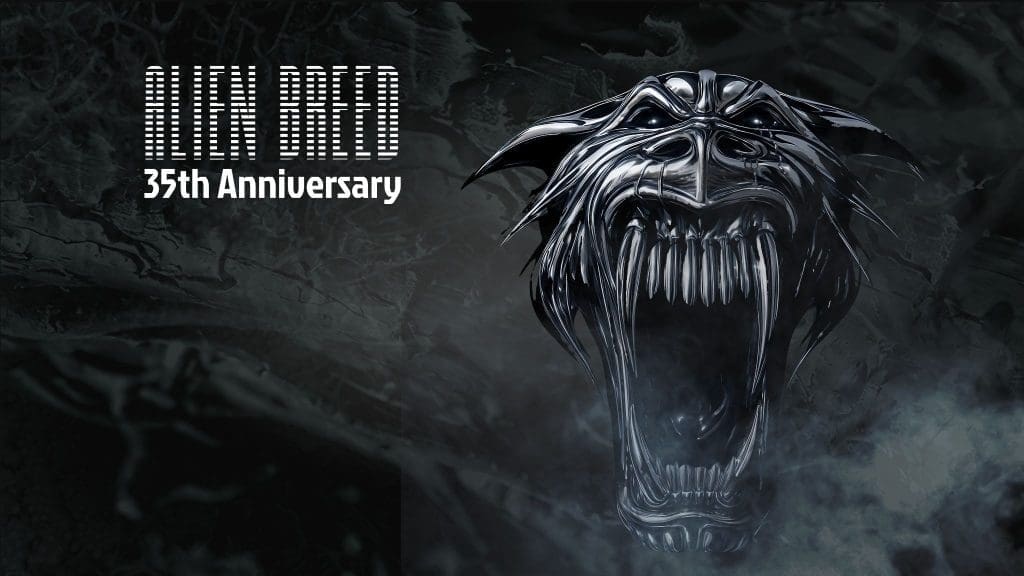
The Alien Breed 35th Anniversary Collection brings back one of the most recognizable names in classic science-fiction horror gaming, celebrating more than three decades of alien encounters, claustrophobic corridors, overwhelming enemy hordes, and survival-focused action. Originally introduced in 1991 during the golden age of Commodore Amiga gaming, the Alien Breed franchise developed a reputation for combining top-down shooting, exploration, ammunition management, and an oppressive science-fiction atmosphere. The anniversary collection gathers six classic games and several historically significant versions into a single package, offering both longtime fans and newcomers an opportunity to experience the evolution of the series from its early 2D origins to its later experiments with fully three-dimensional environments. With Halloween approaching, new Steam updates also make the collection more accessible through customizable controls and optional gameplay assistance, allowing players to choose between the original games’ demanding difficulty and a more forgiving experience.
A 35-Year Legacy of Science-Fiction Horror
Returning to the Origins of Alien Breed
Alien Breed (1991)
The original Alien Breed established the fundamental gameplay elements that would define the franchise. Released in 1991 for the Commodore Amiga, the game placed players in hostile environments filled with aggressive extraterrestrial enemies, narrow passageways, locked doors, and limited resources. Rather than relying exclusively on shooting, progression required players to explore interconnected areas, locate keys, manage their available ammunition, and survive increasingly dangerous encounters.
The overhead perspective gave players a broad view of their immediate surroundings while maintaining the tension associated with restricted visibility and enclosed environments. Enemy encounters could quickly overwhelm an unprepared player, making positioning, movement, and ammunition conservation important parts of the experience. The combination of action and exploration helped distinguish Alien Breed from more straightforward arcade shooters, establishing a formula that could accommodate additional weapons, increasingly complex environments, and more challenging enemy encounters.
Alien Breed: Special Edition (1992)
Released in 1992, Alien Breed: Special Edition expanded on the original game’s foundation and represents an important part of the series’ early history. During this period, enhanced editions of successful Amiga games frequently offered additional content, refinements, and expanded gameplay opportunities, giving players more reasons to return to familiar environments and mechanics.
For modern players, the inclusion of both the original Alien Breed and Special Edition is particularly valuable because it preserves two distinct releases from the franchise’s formative years. Instead of presenting only one definitive version, the collection provides an opportunity to explore how the series developed during its earliest stages. This historical perspective makes the package relevant not only to fans of retro action games but also to players interested in the evolution of game design on the Amiga platform.
Alien Breed II: The Horror Continues
Alien Breed II: The Horror Continues (1993)
The franchise continued in 1993 with Alien Breed II: The Horror Continues, a sequel that carried the series’ hostile science-fiction setting into another generation of encounters. By this point, the central appeal of Alien Breed was firmly established: players were expected to navigate dangerous environments, confront large numbers of enemies, and make tactical decisions while operating under pressure.
The anniversary collection includes both the ECS and AGA versions of the game. These distinctions are important to Amiga enthusiasts because ECS, or Enhanced Chip Set, and AGA, or Advanced Graphics Architecture, represent different generations of the platform’s graphics hardware. AGA systems offered enhanced graphical capabilities, including a larger color palette and additional display options compared with earlier Amiga configurations.
Preserving both versions gives the collection additional historical significance. It allows players to experience different technical presentations of the same release rather than limiting the game to a single version. For retro enthusiasts, such inclusions help document the relationship between game development and the hardware capabilities available during the early 1990s.
Balancing Action, Exploration, and Resource Management
The appeal of Alien Breed II extends beyond its alien encounters. The franchise’s traditional gameplay structure places considerable importance on the relationship between exploration and combat. Players must investigate their surroundings while remaining prepared for enemies that can appear in confined spaces, potentially turning a routine journey through a level into a desperate fight for survival.
Resource management also contributes to the tension. Ammunition, keys, and credits can influence how efficiently players progress through the game, making the decision to spend resources immediately or preserve them for later encounters an important consideration. These mechanics create a different rhythm from modern shooters that emphasize continuous ammunition availability and frequent checkpoints.
For players accustomed to contemporary action games, this design can initially feel unforgiving. However, it is also part of the historical identity of Alien Breed. The series emerged during an era when demanding difficulty, repeated attempts, and learning enemy patterns were integral to many action games. The new accessibility options available in the anniversary collection provide a way to approach these mechanics without necessarily accepting every aspect of their original difficulty.
Alien Breed: Tower Assault Expands the Formula
Alien Breed: Tower Assault (1994)
Released in 1994, Alien Breed: Tower Assault continued the franchise’s development while retaining the series’ emphasis on combat, exploration, and survival. Its inclusion in the anniversary collection is particularly notable because the package preserves both the Amiga and Amiga CD32 versions.
The Amiga CD32 was Commodore’s CD-based gaming console, introduced in 1993. Built around Amiga technology, it brought familiar computer gaming experiences to a dedicated console format and supported games distributed on compact discs. Comparing the Amiga and CD32 editions of Tower Assault provides an opportunity to examine how developers adapted software to different hardware configurations and distribution formats during this period.
The game continues the franchise’s established emphasis on navigating dangerous environments while confronting aggressive alien opponents. Exploration and combat remain closely connected, requiring players to understand the layout of their surroundings and respond to threats while searching for the resources needed to advance.
The Importance of Preserving Multiple Versions
The availability of both versions of Tower Assault strengthens the collection’s appeal to preservation-minded players. Classic games frequently existed in multiple editions because of differences in hardware capabilities, memory constraints, storage formats, and platform-specific requirements. When a modern collection includes these versions, it offers more than a convenient way to play an old game: it also preserves elements of the original release history.
This is particularly relevant to the Amiga era, when differences between computer configurations and console hardware could affect the presentation and experience of individual titles. The anniversary collection brings these releases together in one place, making it easier for players to explore the franchise without locating original hardware or searching for separate historical editions.
Alien Breed Enters the Third Dimension
Alien Breed 3D (1995)
With Alien Breed 3D, released in 1995, the franchise moved into a fully three-dimensional environment. The Amiga CD32 version is included in the anniversary collection, preserving a significant step in the series’ technological evolution.
The transition from an overhead perspective to a 3D environment fundamentally changes how players experience a science-fiction horror game. Instead of viewing enemies and corridors from above, players navigate the environment from a first-person perspective, placing greater emphasis on spatial awareness, visibility, and the direction of incoming threats. Corridors become spaces that must be explored directly, while enemies can emerge from ahead or from areas outside the player’s immediate field of view.
This shift also changes the relationship between exploration and tension. In a top-down game, players can often assess the arrangement of a room and the position of enemies relatively quickly. A first-person perspective restricts that overview, making movement through unfamiliar environments more uncertain. The result is a different form of vulnerability that fits naturally with the franchise’s science-fiction horror identity.
The Technical Challenge of 3D Gaming on the Amiga
The mid-1990s marked an important period in the development of real-time 3D games. Dedicated 3D acceleration was not yet a standard feature across the gaming market, and developers frequently had to work within substantial processing and memory limitations. The Amiga platform presented its own hardware constraints, making the development of immersive three-dimensional environments a considerable technical challenge.
Alien Breed 3D represents the franchise’s attempt to adapt to this changing landscape. Its inclusion gives the anniversary collection a broader historical scope, illustrating how the series evolved alongside the industry’s movement toward first-person action games. It also provides a useful comparison with the earlier titles, allowing players to examine how the same general themes of alien combat and hostile environments translate into a different visual and gameplay format.
Alien Breed 3D II: The Killing Grounds
Alien Breed 3D II: The Killing Grounds (1996)
The collection concludes its historical lineup with Alien Breed 3D II: The Killing Grounds, released in 1996. Commonly associated with the subtitle TKG, the game continues the franchise’s exploration of three-dimensional action and represents the later phase of its original Amiga-era development.
By the time of its release, first-person games were becoming increasingly important to the wider PC and console markets. Improvements in rendering techniques, level design, and hardware capabilities were encouraging developers to create more immersive environments and increasingly complex encounters. Against this backdrop, The Killing Grounds serves as an example of the direction the Alien Breed franchise was taking during the middle of the 1990s.
The game’s inclusion is important because it completes the collection’s coverage of the original series’ major releases. Players can follow the progression from the overhead action of the early 1990s to the first-person perspective of the later games, observing how the franchise responded to changes in technology and player expectations.
A Different Kind of Horror
Three-dimensional environments offer opportunities to create tension through limited visibility, environmental scale, and uncertainty about what lies around the next corner. These elements complement the Alien Breed formula, which already relies on hostile surroundings and enemies capable of overwhelming players who are not prepared.
The first-person entries also demonstrate why the collection is more than a simple compilation of interchangeable retro shooters. Although the games share a common universe and thematic identity, their differing perspectives and technical approaches produce distinct experiences. Players interested in the history of first-person action games can explore an earlier approach to 3D combat, while fans of the original overhead games can see how the franchise experimented with a different format.
Six Classic Games in One Collection
The Alien Breed 35th Anniversary Collection brings together six main titles, while also preserving several distinct versions of selected releases. Its complete lineup consists of Alien Breed (1991), Alien Breed: Special Edition (1992), Alien Breed II: The Horror Continues (1993, ECS and AGA versions), Alien Breed: Tower Assault (1994, Amiga and Amiga CD32 versions), Alien Breed 3D (1995, Amiga CD32 version), and Alien Breed 3D II: The Killing Grounds (1996).
This structure allows players to explore the franchise across approximately five years of releases, from its initial 2D format to its later 3D experiments. The package also preserves the differences between selected platform and hardware editions, giving enthusiasts additional opportunities to compare how individual titles were presented on the Amiga and Amiga CD32.
The collection’s historical focus makes it particularly appealing to players who grew up with the original games, but its broader value extends to newer audiences. Modern gaming libraries offer many opportunities to experience contemporary science-fiction shooters, yet older games often reveal different design priorities. Limited resources, demanding encounters, and more direct progression systems can create a distinct rhythm that is not always present in current releases.
Bringing these titles together also reduces the effort required to access games originally distributed across different releases and formats. Rather than tracking down original copies and compatible hardware, players can explore the series through a modern collection designed for current gaming platforms.
New Steam Updates Introduce Custom Controls
One of the most important additions highlighted in the latest update is a new custom controls menu for the Steam version. The feature allows players to remap controller and keyboard settings, providing greater flexibility in how they interact with the games.
Control customization is especially relevant when revisiting older titles. Games designed around the keyboards and controllers of earlier generations may not always match the expectations of modern players. Differences in button layouts, movement conventions, and personal preferences can affect the experience, particularly when games require precise movement or rapid reactions during combat.
A configurable control system can help address these differences without changing the underlying identity of the games. Players can adapt their preferred input method to the available controls, potentially making the transition to the original titles more comfortable. The update is particularly useful for players who prefer modern controller layouts or want to configure keyboard inputs to suit their individual play styles.
Making Classic Games More Comfortable to Play
Control remapping is a practical feature for preservation-focused collections because it allows older games to remain accessible as gaming hardware and player expectations change. A control scheme that felt natural decades ago may be less intuitive today, especially for players who have spent years using modern console controllers or contemporary PC games.
The new menu gives Steam players more control over this aspect of the experience. It is important to note, however, that the announced customization feature specifically applies to the Steam version. The available information does not establish that the same control options have been introduced on every platform.
Optional Gameplay Assistance Makes the Collection More Accessible
The latest Steam update also introduces optional gameplay assistance designed for players who find the original games too difficult. The announced options include infinite ammunition, invulnerability, additional keys, and more credits. These features provide ways to reduce some of the pressure associated with the franchise’s traditional resource management and demanding difficulty.
Infinite ammunition removes the need to conserve bullets during encounters, allowing players to focus on movement, exploration, and combat rather than worrying about running out of firepower. Invulnerability reduces the danger associated with incoming attacks, making it easier to explore unfamiliar areas and learn how individual levels are structured. Additional keys can help players overcome progression obstacles, while more credits provide extra flexibility within the games’ resource systems.
Together, these options offer a different way to approach the collection. Players who want to experience the games as closely as possible to their original design can retain the traditional challenge, while those more interested in exploring the environments or revisiting the series’ history can reduce the likelihood of repeated failures.
Preserving the Original Challenge While Offering Alternatives
Difficulty has always been an important part of the identity of many classic action games. Limited resources and punishing encounters encouraged players to learn enemy patterns, remember level layouts, and approach dangerous situations carefully. However, those same mechanics can make older games difficult to access for people who are unfamiliar with their design conventions or have limited time to invest in repeated attempts.
Optional assistance offers a compromise between historical authenticity and modern accessibility. Rather than removing the original challenge for everyone, these settings give individual players the freedom to decide how they want to experience the games.
This flexibility is particularly appropriate for a collection spanning multiple generations of game design. The earlier overhead titles and later first-person entries may present different challenges, and players may wish to approach each game differently. The ability to reduce resource pressure or avoid damage can help newcomers explore the collection at their own pace.
The announced features are available as part of the new Steam updates. The announcement does not specify that every assistance option is available on the PlayStation 5 or Xbox Series X|S versions, so players interested in a particular platform should verify which features are supported by that edition.
A Strong Choice for Halloween Gaming
The timing of the anniversary collection makes it a natural candidate for Halloween coverage. Science-fiction horror offers a different atmosphere from traditional supernatural horror, replacing haunted houses and paranormal encounters with hostile alien environments, technological isolation, and the fear of being trapped far from safety.
The Alien Breed games combine these themes with action-oriented gameplay. Instead of relying exclusively on cinematic sequences or scripted scares, they create tension through enemy encounters, restricted environments, and the need to manage resources under pressure. This approach can appeal to players who want a Halloween experience that emphasizes interactive survival rather than passive storytelling.
The series’ retro presentation also provides a different kind of appeal. Its visual style and gameplay mechanics reflect the limitations and design priorities of the 1990s, offering a contrast with contemporary horror games built around advanced lighting, detailed character models, and sophisticated audio systems. For players interested in gaming history, the collection provides an opportunity to revisit the period when home computers such as the Amiga played an important role in the development of action and horror games.
The newly announced Steam features further strengthen its appeal as a seasonal recommendation. Players who want a demanding retro challenge can retain the original difficulty, while those who simply want to explore classic science-fiction horror can use the available assistance options to reduce frustration.
Platforms and Availability
The Alien Breed 35th Anniversary Collection is available through several digital storefronts, including Steam, GOG, the Epic Games Store, Xbox, and PlayStation 5. This broad distribution gives players multiple ways to access the collection, depending on their preferred gaming platform and purchasing habits.
PC players can choose between several storefronts, while console players can access the collection through the relevant Xbox and PlayStation digital stores. The inclusion of multiple storefronts is useful for a collection intended to reach both dedicated retro enthusiasts and players discovering the franchise for the first time.
Players should distinguish between general collection availability and the specific features announced for Steam. The latest update explicitly highlights customizable controls and gameplay assistance for Steam users, but equivalent support across all other versions has not been confirmed in the supplied announcement. Checking the relevant store listing and platform-specific update information is therefore advisable before purchasing.
For players considering the collection primarily as a Halloween purchase, the six-game lineup offers a substantial historical overview of the franchise. Its combination of overhead action, first-person exploration, multiple legacy versions, and optional difficulty adjustments creates several different ways to engage with the series.
Conclusion
The Alien Breed 35th Anniversary Collection offers a substantial retrospective of a classic science-fiction horror franchise, bringing together six games that document its evolution from the original 1991 overhead shooter to the three-dimensional action of Alien Breed 3D II: The Killing Grounds in 1996. By preserving important ECS, AGA, Amiga, and Amiga CD32 versions, the collection also provides value for enthusiasts interested in the history of the platform and the development of retro gaming. The new Steam updates add practical improvements through customizable keyboard and controller settings, infinite ammunition, invulnerability, additional keys, and more credits, giving players greater control over how they approach the original games’ demanding mechanics. With availability across PC storefronts, Xbox, and PlayStation 5, the collection offers longtime fans a chance to revisit a memorable part of gaming history and introduces a new generation of players to its distinctive blend of alien combat, resource management, and retro horror. For anyone looking to combine classic gaming with a science-fiction horror theme this Halloween, the anniversary collection provides a varied journey through more than three decades of Alien Breed history.