A Smaller Room, but a Much Bigger Opportunity
On September 9, I attended Xsolla’s Rosh Hashanah event in Tel Aviv, and for me the most interesting part actually started before the larger evening celebration. The first part took place at Xsolla Club TLV and was deliberately small, bringing together a focused group of people who are actively shaping the local gaming industry. Developers, journalists, executives, founders and people in key industry positions were all in the same room, with food and refreshments around us, but the real value was the ability to simply talk. I attend quite a few gaming events, and I have learned that the number of people in the room is rarely what determines whether an event is useful. Sometimes the opposite is true. When the group is carefully selected and small enough to actually have conversations, networking becomes much more natural and much more valuable.
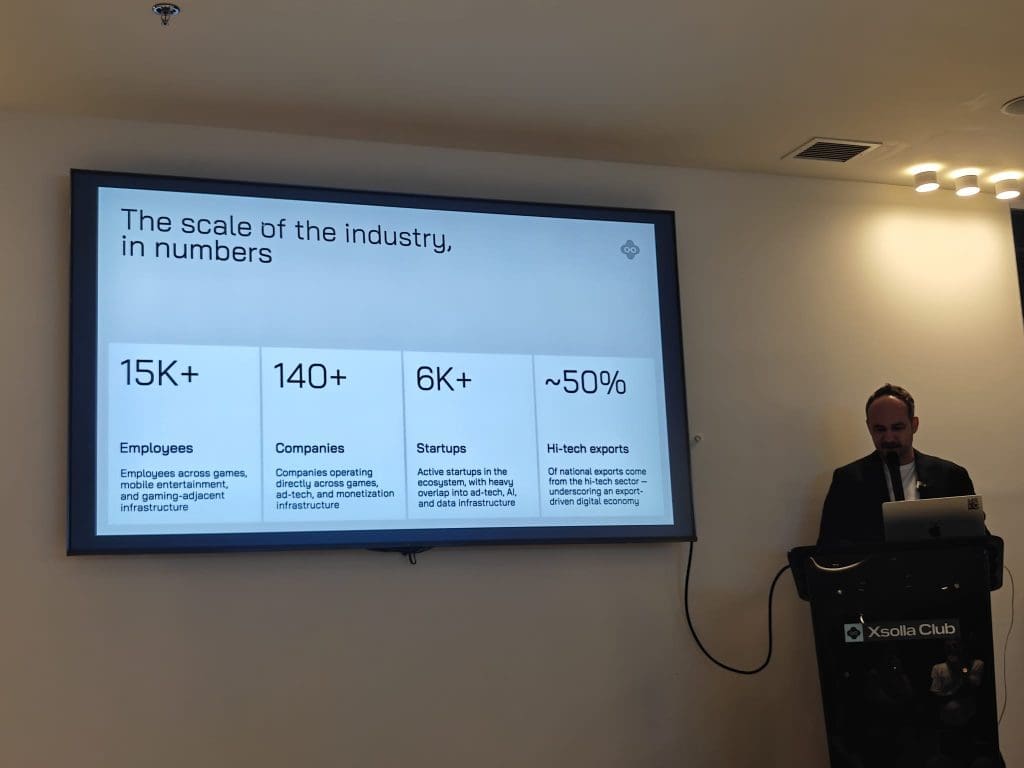
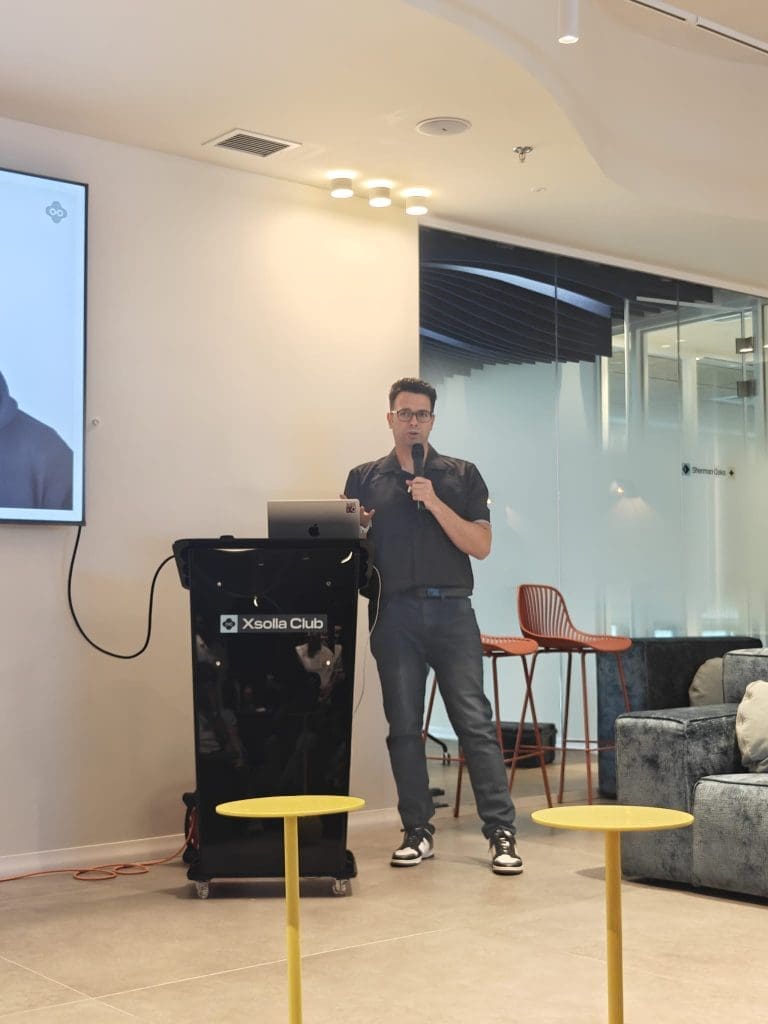
That atmosphere became even more meaningful when Nikita Sherman, SVP of Business Development at Xsolla, and Guy Ulmer presented data about the gaming industry and where the regional ecosystem is heading. The GamesBeat report sponsored by Xsolla puts Israel’s gaming and interactive entertainment ecosystem at roughly $10 billion in economic value and around 15,000 employees, while more than 140 companies operate across gaming, mobile entertainment, adtech and monetization infrastructure. What interested me more than the numbers themselves was the wider picture behind them. Israel is not necessarily known as a traditional AAA development powerhouse, but its influence on mobile gaming, user acquisition, analytics, monetization, AI and LiveOps reaches far beyond the size of the local market. The report also presents Israel and Cyprus as two very different but increasingly complementary gaming hubs, with Israel focused more heavily on technology and product innovation while Cyprus has become an important base for international operations and scaling.
From Industry Data to Actual Human Connections
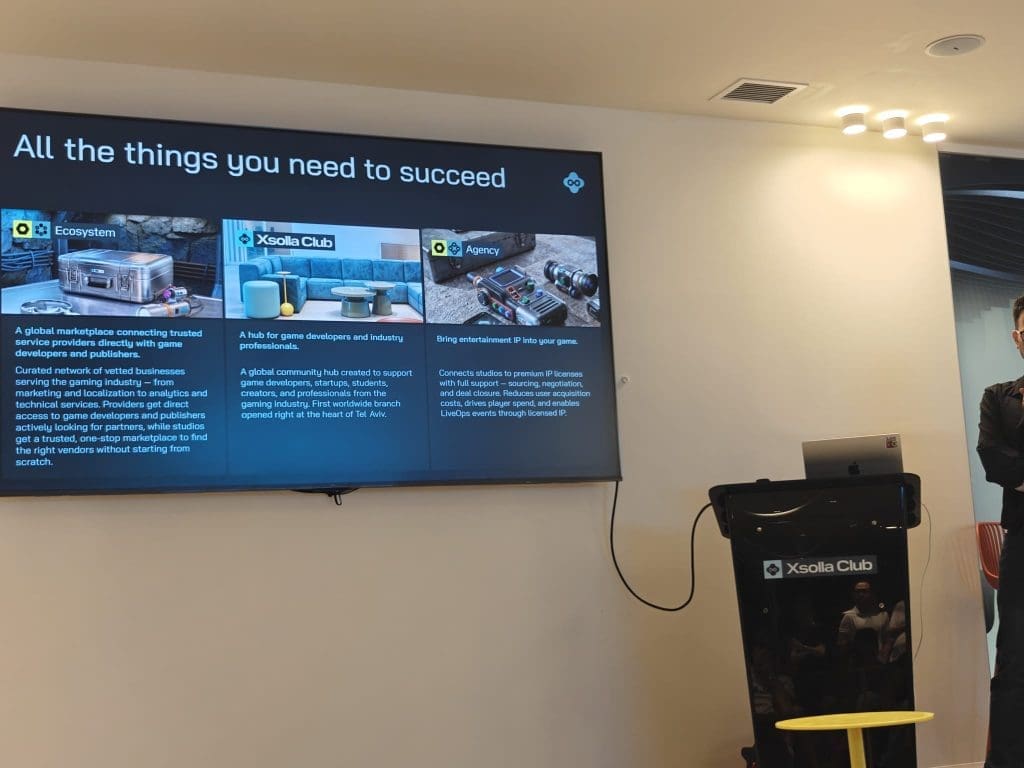
For me, that connection between the presentation and the physical event was probably the most important part of the day. Industry reports can tell you that ecosystems grow through investment, infrastructure and technology, but standing in Xsolla Club TLV makes another factor impossible to ignore: people need places where they can actually meet each other. Sherman’s section in the report emphasizes that networks, collaboration and community have been particularly important to the development of Israel’s gaming ecosystem. I completely agree with that after attending this event. A developer can meet a journalist who later covers a project, a founder can meet someone who introduces them to a potential partner, and two people working in completely different areas of gaming can discover that they have a reason to work together. These connections are difficult to measure immediately, but I believe they are one of the most important things an organization like Xsolla can help create locally.
At 19:00, the second part of the event began on the rooftop and continued until 23:00, with a much more social atmosphere. One of the first things every guest received was a sticker carrying the name of a character from gaming or entertainment, with the goal of finding the matching partner somewhere at the event. It sounds like a simple activity, but I thought it worked surprisingly well because it gave people an immediate reason to approach someone they did not know. Instead of standing with the same familiar group for the entire evening, people had to move around, ask questions and start conversations. For a networking event, that is exactly the kind of small idea I appreciate because it removes some of the awkwardness without making the interaction feel forced.

A Celebration That Still Felt Connected to Gaming
The rooftop itself felt like much more than a standard corporate gathering. Food was provided by Nina, there were talented live musicians throughout the evening, and the entire setup felt like Xsolla had invested not only money but actual thought into the experience. Later, we took part in a Kahoot quiz built around gaming industry questions from different periods and areas of the business. It became one of the most entertaining moments of the night, especially because the questions rewarded people who had followed the industry for years. It was therefore not particularly surprising that the winner was an industry veteran. More importantly, the quiz kept gaming at the center of the evening instead of turning the event into another generic rooftop party with a gaming logo attached to it.
What stayed with me after the event was not one presentation, activity or meal, but the combination of all of them. I met new people, strengthened existing relationships and had conversations that probably would not have happened through LinkedIn messages or video calls. I spend a large part of my professional life communicating digitally, so events like this are a reminder that the gaming business still depends heavily on human relationships. Israel already has significant strengths in mobile gaming, monetization, data, AI and technology, and the GamesBeat report describes an ecosystem whose influence is much larger than its domestic market. In my view, the next step is not only building more companies and technologies, but creating more physical spaces where the people behind them can meet regularly.
Summary
Xsolla’s Rosh Hashanah event was one of those events where I left feeling that the investment could have an impact long after the rooftop closed at 23:00. The smaller session at Xsolla Club TLV created serious industry conversations, the presentation added useful context about where Israel and the surrounding gaming ecosystem currently stand, and the evening event created a relaxed environment where new relationships could actually begin. I strongly believe that if Xsolla continues investing in physical events like this, the benefit will extend far beyond Xsolla itself. The entire local gaming industry can gain from stronger connections between developers, media, executives, investors and other people working around games. Some of those conversations may lead nowhere, but others may become partnerships, stories, projects or opportunities months or even years later. That is exactly why I think physical industry events still matter.