A Childhood Memory Came Back to Life
There are games I remember because they were good, and then there are games that somehow became part of my life outside the screen. Crazy Taxi belongs firmly in the second category. I loved the series as a kid, but one of my strongest memories has almost nothing to do with actually holding a controller. When my younger brother had trouble falling asleep, I used to invent bedtime stories for him about a completely crazy taxi driver racing around the city, picking up passengers, taking ridiculous shortcuts and getting into increasingly absurd situations. Years later, standing at Gamescom 2026 with Crazy Taxi: World Tour in front of me, that memory was the first thing that came back. This was easily one of the meetings and hands-on sessions I had been looking forward to most at the entire show, and that kind of emotional baggage can be dangerous because nostalgia has a habit of setting expectations impossibly high.
That is why I was genuinely relieved when I started playing and realized that SEGA has not forgotten what actually made Crazy Taxi fun. World Tour still understands that the player should almost never feel comfortable. You pick a direction, accelerate, make a decision, change that decision because something else suddenly looks more important, jump, drift, crash, search for the next objective and immediately move again. The game has an almost constant forward momentum, and that was easily my favorite part of the Gamescom experience. I never felt like I was waiting for the game to entertain me. Instead, it kept creating reasons for me to do something, and after a few minutes I stopped thinking about the fact that I was testing an upcoming game at a trade show and simply started playing it the way I used to play Crazy Taxi years ago. That is probably the biggest compliment I can give it.
More Than Picking Up Passengers
Crazy Taxi: World Tour is being expanded far beyond the traditional loop of simply finding a passenger and reaching a destination before the clock becomes your enemy. The full game is planned around five separate cities rather than one connected open world, with different terrain, driving challenges and mission types designed around each location. The story follows returning protagonist Axel as he travels around the world after his taxi is stolen, turning what was traditionally an arcade-focused concept into a proper campaign. There will also be different vehicles, customization systems and an Arcade Mode designed to preserve the more traditional Crazy Taxi experience. SEGA currently plans to release the game in 2027 for PlayStation 5, Xbox Series X|S, Xbox on PC, Steam and Nintendo Switch 2.
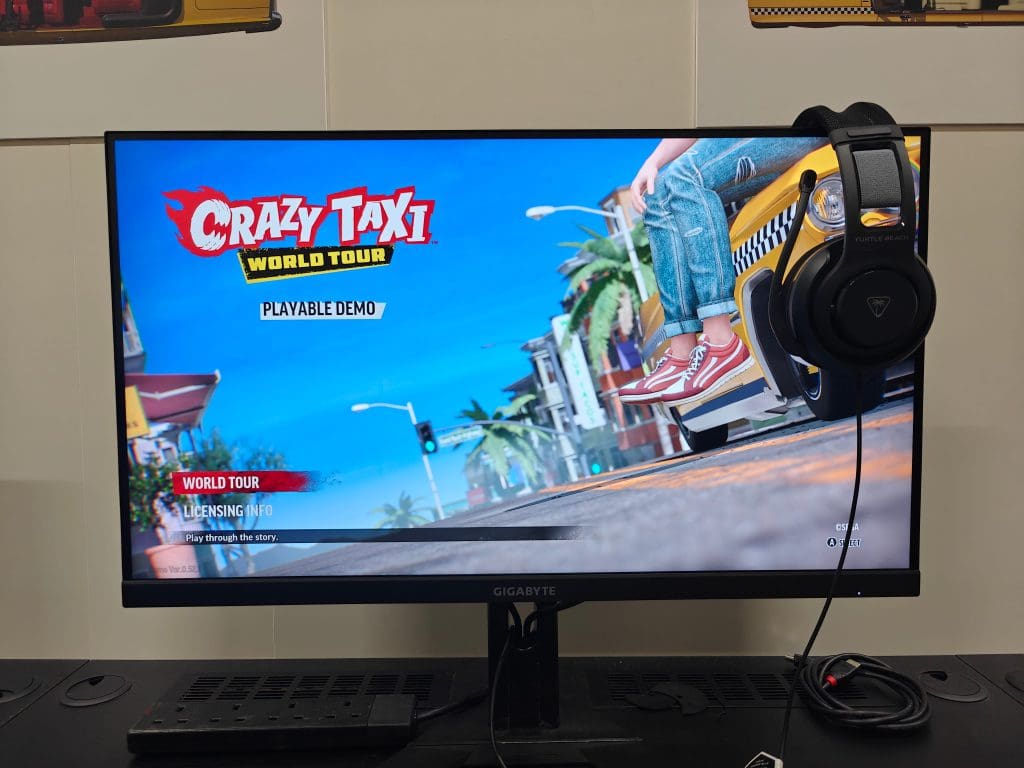
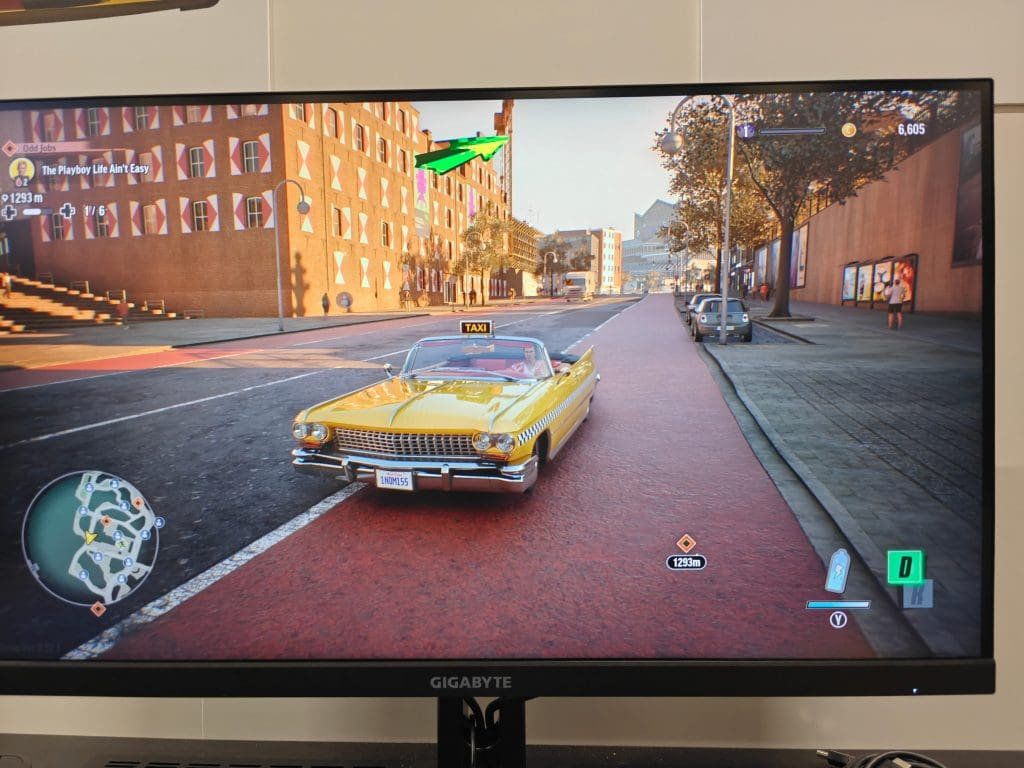
The important part for me, however, is not how many features SEGA can put on the back of the box. It is whether those features make Crazy Taxi more entertaining, and based on what I played at Gamescom, the variety of activities is already one of World Tour’s strongest qualities. The Gamescom build gave players access to one of the five cities planned for the final game, and the structure constantly encouraged movement instead of turning the city into a large map filled with reasons to stop. Missions changed what I was concentrating on, routes pushed me toward different parts of the environment, and the driving remained deliberately aggressive. I always wanted another objective. I always wanted to see what was around the next corner. That feeling is extremely important because Crazy Taxi can become repetitive very quickly if every activity eventually feels like another version of the same delivery. World Tour still has to prove that its campaign can maintain this pace for many hours, but the demo made me much more confident that SEGA understands the problem.
Modernizing the Madness Without Cleaning It Up
One of the more interesting changes is how World Tour approaches accessibility and pacing. The original Crazy Taxi was easy to understand but had techniques and controls that rewarded players who were willing to master them. For World Tour, the development team rebuilt that foundation while trying to make the controls more approachable for modern players. Timers are also used more selectively. Certain passenger and mission activities remain time-based, but players are not constantly forced to race against a universal countdown while exploring. Outside those challenges, you can drive around the city, explore and choose what you want to do at your own pace. That might sound like a small design change, but I think it is one of the smartest ways to expand Crazy Taxi into a substantially larger game without removing the pressure that makes its missions exciting.
World Tour is also taking the franchise online for the first time, with multiplayer supporting up to six players. Pickup Race turns the passenger system into direct competition, while Cops ‘n’ Cabbies creates an asymmetrical battle between taxi drivers and police. The multiplayer test also included ranked and custom match structures, alongside multiple vehicles, playable drivers and customization options. I like the idea, especially because Crazy Taxi has always felt like a game that should be entertaining when several people are causing chaos at the same time, but multiplayer is not the reason I personally want World Tour. My biggest concern is actually the opposite. SEGA is taking a beautifully simple arcade concept and adding a campaign, multiple cities, exploration, customization and online systems around it. More content does not automatically create a better Crazy Taxi. If progression becomes too slow or the story interrupts the driving too often, some of that arcade magic could disappear. After playing it, though, I am far less worried than I was before Gamescom because the core gameplay still feels like it wants me to drive first and think about everything else later.
Summary
Crazy Taxi: World Tour was one of the games I wanted to experience most at Gamescom 2026, and it was also one of the easiest games for me to judge emotionally because I have such a personal history with the series. I went into the meeting remembering the game I played as a kid and the ridiculous taxi stories I used to tell my younger brother before he fell asleep. I came out thinking about something much simpler: I want to play this with him again. The missions I experienced were varied, the game rarely gave me a reason to stop moving, and that constant desire to find the next activity captured exactly what I wanted from a modern Crazy Taxi. There are still legitimate questions about whether five cities and a longer campaign can maintain that intensity across dozens of sessions, and I do not want World Tour to become bloated simply because modern games are expected to be bigger. But based on my Gamescom experience, this feels less like SEGA trying to resurrect an old name and more like someone finally remembered why driving a taxi like a complete maniac was so much fun in the first place. For me, that was enough to turn nostalgia into genuine excitement, and I can already see myself losing hours to it again, this time sitting next to the same brother who once heard those Crazy Taxi adventures as bedtime stories.